Quince
Discover the natural plants and herbs used in our products
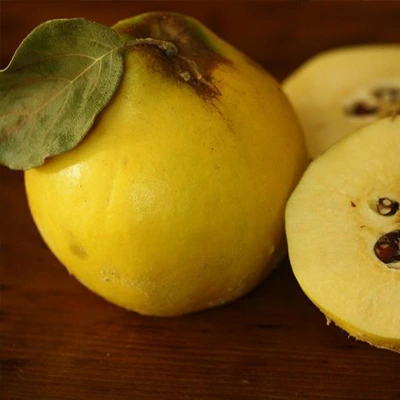
Quince
Traditionally, quince or/and quince seed mucilage is used as an anti-phlegmatic, heat suppressant, laxative, aphrodisiac, and heart and brain tonic.
Benefits & Properties
Common Name: Quince, Quince Seed
Scientific Name: Cydonia oblonga Mill.
History and Origin
Quince belongs to the Maloideae subfamily of the Rosaceae family, which includes apples and pears. (1) The ancient Greeks and Romans considered quince as one of their favorite fruits, particularly for its medicinal qualities. It was cherished as a symbol of love, happiness, and prosperity. During the middle ages, the Arabs also valued this fruit very much, owing to its numerous medicinal virtues. (2)
It is native to western Asia, and its origin is considered to be the Caucasus region including Armenia, Azerbaijan, Iran, southwestern Russia, and Turkmenistan. During ancient times, quince spread from its wild center of origin to the countries bordering the Himalaya Mountains to the east, and throughout Europe to the west. (3)
Nowadays, this fruit tree grows widely in countries with moderate and subtropical climates. (4) Turkey is the largest producer followed by China, Iran, Argentina, and Morocco. (5) The medicinal parts are the fruit and seeds (6) (Behidana). (7)
Quince Plant Structure
Quince is a small deciduous tree, growing up to 8 m high. (7) Leaves are ovate to oblong. (5) The flowers are white (5) or pink, perfumed, relatively large, (6) and having 5 petals. (5)
The fruits, which are pear or apple-shaped, are golden yellow in color, juicy, fragrant, sub-acid or sour in taste and contain many seeds, closely packed in two vertical rows, (8) in each of the five cavities in the center of the fruit. (7) The peel is covered with abundant hairs, which disappears with fruit ripening. (8)
Quince seeds are black or red. (7) They possess a taste resembling that of bitter almonds, but fainter. (9) Quince seeds embody a mucinous material. Upon soaking the seeds in water, the material is extracted into water, forming mucilage. (10)
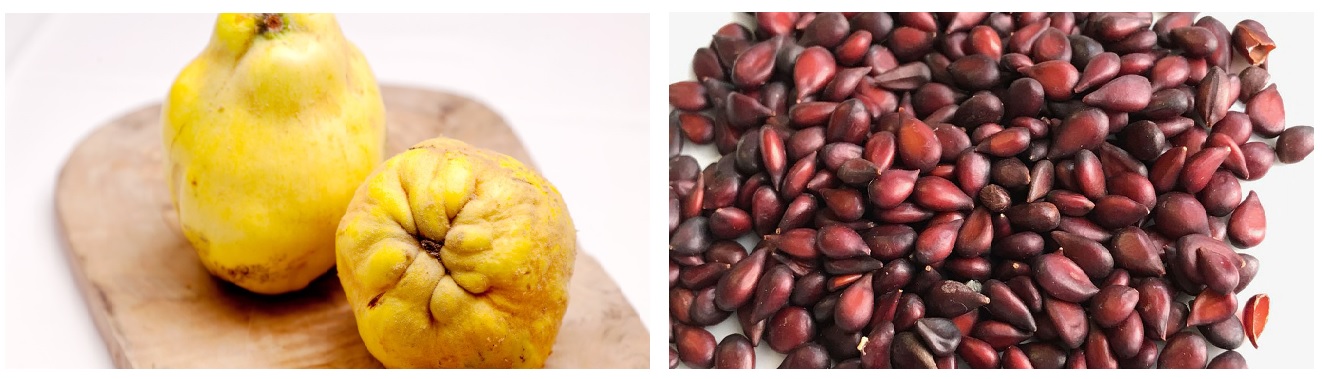
Fig. 1 Fruit of Cydonia oblonga Fig. 2 Quince Seed
Quince Health Benefits
What Are Quince Side Effects?
1. When taken by mouth (Oral drugs): Health risks or side effects following the proper administration of designated therapeutic dosages are not recorded. (6)
2. Pregnancy and breast-feeding: There isn't enough reliable information to know if quince or quince seed is safe to use when pregnant or breast-feeding. Stay on the safe side and avoid it. (29)
Generally, every person may be allergic to certain herbs and spices. This sensitivity must be first diagnosed by the person and secondarily by the physician. However, these allergic reactions do not cause chronic or acute side effects, and after identifying the allergenic plant and removing it from the diet, allergy-related complications will be eliminated. No company or product can be aware of the allergic reactions of different bodies in advance.
Nutritional Information
According to a 2016 review study, the main nutritional composition of quince fruits in 100 g fresh weight includes energy: 176 kj, protein: 0.6g, acid: 0.9 g, carbohydrate: 9.1 g, water: 86.9 g, ash: 0.6 g and fiber: 1.9 g.
Mineral element contents in 100 g quince fruits include Na: 9.2 mg, K: 189 mg, Ca: 66 mg, Mg: 10 mg, Fe: 1.1 mg, P: 25 mg, Cu: 0.006 mg, Zn: 0.013 mg, and Mn: 0.002 mg.
The vitamin contents in 100 g fresh quince fruit include retinol (vitamin A₁): 5.5 μg, thiamine (vitamin B1): 30 μg, riboflavin (vitamin B₂): 30 μg, niacin (vitamin B3): 0.2 mg and ascorbic acid (Vitamin C): 13 mg. (30)
Quince Daily Dosage
Mix 1 tablespoon of quince seeds with 1 cup of water (6) and boil for 5-6 minutes to obtain a thick mucilage. Remove seeds and drink the liquid warm.
* Do not boil crushed or powdered quince seeds. Also, avoid chewing whole quince seeds.
Bioactive Compounds
- Several studies have shown that quince fruit is rich in polyphenols, organic acids, and amino acids. Quince polyphenols are mainly hydroxycinnamic acids (caffeoyl and coumaroyl derivatives), flavonols (quercetin and kaempferol derivatives), and, in minor proportion, flavanols (catechin and epicatechin). (1)
Also, in a study, phenolic compounds (including chlorogenic acid, which is the main phenolic component of the fruit, and flavonoids (rutin, quercetin and kaempferol)), tannins and pectin were introduced as active ingredients of quince fruit. (13)
- According to a 2005 study, quince seeds contain both essential and nonessential amino acids and the three most abundant are glutamic and aspartic acids and asparagine. (31) Vitamin C and mucilage are also important active ingredients of quince seeds. (6)
Quince seeds mucilage contains cellulose, water-soluble polysaccharides (32) like pectin, (33) flavonoids, sterols, alkaloids, tannins, saponins, resin, phenol, and terpenoids. (34)
Best Time to Consume
Quince seeds mucilage may decrease how much oral drugs (medications taken by mouth) the body absorbs. Thus, it can decrease the effectiveness of the medication. So drink quince seed decoction at least one hour after medications you take by mouth. (35)
Possible Drug Interactions
We currently have no information for quince fruit or quince seed Interactions. (29)
Traditional Use
The seeds of Cydonia oblonga have been used traditionally in diarrhea, dysentery (36) (an infection in your intestines that causes bloody diarrhea (37)), cough, sore throat and bronchitis, constipation and intestinal colic. (36)
(Intestinal colic manifests with a cramp-like pain that may occur when the gastrointestinal tract is blocked, preventing food and liquid from passing through the body. (38))
Also, in Unani Medicine, quince and/or quince seed is used as anti phlegmatic, dry cough suppressant, anti-tuberculosis, exhilarant, heat suppressant, astringent, laxative, aphrodisiac, stomachic, heart and brain tonic. (7)
Some Questions about Quince and Quince Seed
References
1. http://downloads.hindawi.com/journals/jfq/2018/1460758.pdf
2. https://www.researchgate.net/publication/347436524_Quince
3. https://www.ars.usda.gov/ARSUserFiles/20721500
4. https://www.researchgate.net/publication/338723682
5. https://www.researchgate.net/publication/286412498
6. PDR for herbal medicines. (2000). 2nd ed. Montvale, NJ: Medical Economics Company
7. https://www.researchgate.net/publication/330684346
8. http://nopr.niscair.res.in/bitstream/123456789/12741/1/IJNPR%202%283%29%20354-357.pdf
9. Singh, R. (2001). Encyclopaedic Dictionary of Bio-Medecine, volume-2 (H-Z). New Delhi: Sarup & Sons.
10. https://www.sciencedirect.com/science/article/abs/pii/S096399691630148X?via%3Dihub
11. https://www.ncbi.nlm.nih.gov/pmc/articles/PMC5582508
12. https://www.britannica.com/science/pepsin
13. http://rps.mui.ac.ir/index.php/jrps/article/view/276
14.https://www.mayoclinic.org/diseases-conditions/ulcerative-colitis/
15. https://www.ncbi.nlm.nih.gov/pmc/articles/PMC4673949/
16.https://www.researchgate.net/publication/49776041
17. https://my.clevelandclinic.org/health/diseases/8622-allergic-rhinitis-hay-fever
18. http://www.sciencedirect.com/science/article/pii/S0378874114000646
19. http://www.ncbi.nlm.nih.gov/pubmed/25934516
20. http://www.hindawi.com/journals/aps/2014/282698/
21. https://www.researchgate.net/publication/326443098
22. https://www.ncbi.nlm.nih.gov/pubmed/20192210
23. https://www.collinsdictionary.com/dictionary/english/antiproliferative
24. https://www.hse.gov.uk/asthma/lungs.htm
25. http://thejaps.org.pk/docs/v-23-1/51.pdf
26. http://saspublisher.com/wp-content/uploads/2016/08/SAJP-57297-304.pdf
27. https://www.ncbi.nlm.nih.gov/pmc/articles/PMC3770045/
28. https://www.researchgate.net/publication/263039441
29. https://www.webmd.com/vitamins/ai/ingredientmono-384/quince
30. https://www.researchgate.net/publication/313742880
31. https://www.researchgate.net/publication/8029577
32. https://www.ncbi.nlm.nih.gov/pmc/articles/PMC4914572/
33. https://ur.booksc.me/book/13454205/edacab
34. https://sites.kowsarpub.com/jjnpp/articles/18418.html
35. https://www.rxlist.com/quince/supplements.htm
36. https://www.researchgate.net/publication/287811528
37. https://www.webmd.com/digestive-disorders/what-is-dysentery
38. https://sydneygutclinic.com/causes-and-treatment-for-colic-in-adults/
39. https://brief.land/jjnpp/articles/59678.html
40. https://www.sciencedirect.com/science/article/pii/S0889157521002659