Aloe Vera
Discover the natural plants and herbs used in our products
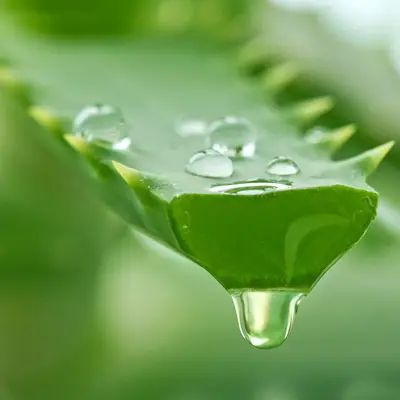
Aloe Vera
Aloe Vera gel is used in treatment of constipation, skin aging, and hair loss. It also can help control diabetes, indigestion, and liver diseases.
Benefits & Properties
Common Name: Aloe vera
Scientific Name: Aloe vera L.
History and Origin
The very first records of Aloe have been found in a collection of Sumerian clay tablets dated 2100 B.C.
The first discussion of Aloe as a laxative was also mentioned in the Papyrus Ebers in 1550 B.C.; not only Egyptians, but also Romans, Greeks, Arabs and Indians recognized the medicinal benefits of this plant.
Aloe Vera was first cultivated for pharmaceutical distribution in 1920. The commercial use of Aloe gel started in the 50s and in the 60s. Pharmacist, Dr Bill C. Coates, in Dallas (Texas, USA) succeeded in extracting Aloe Vera gel while preserving its main benefits.
Although the plant is native to Southern and Eastern Africa, it grows in a large variety of climates including temperate and subtropical areas.
Aloe Vera Plant Structure
Aloe vera is a perennial, drought-resisting plant (i.e., it is able to survive up to 7 years without any water!) with thick, tapered, green lance-shaped, juicy, basal, sharp pointed, jagged and edged leaves.
The leaves join at the stem forming a rosette. Each plant has normally 12 to 16 leaves (between 25 and 30 cm long, while 3-10 cm across the base) weighing up to 1.5 kg when mature.
The leaves of Aloe vera are constituted by the rind (or skin), which is a thick epidermis covered with cuticle surrounding the mesophyll.
Aloe leaves secrete two exudates: one is produced by the pericyclic cells under the cutinized epidermis of the leaves, and it is a reddish-yellow juice, called latex; the other one is produced by the thin-walled tubular cells in the inner central zone (parenchyma) of the leaf, and it is a transparent, slippery mucilage or gel, called aloe vera gel.
The leaves are covered by a thick cuticle and successive leaves have fewer whitish spots and are gray-greenish in color.
Its flowering stage starts from October to January, and the long inflorescence has a large number of small bright red or yellow flowers. Propagation is generally vegetative. Fruits develop from February to April and contain many seeds. (1)
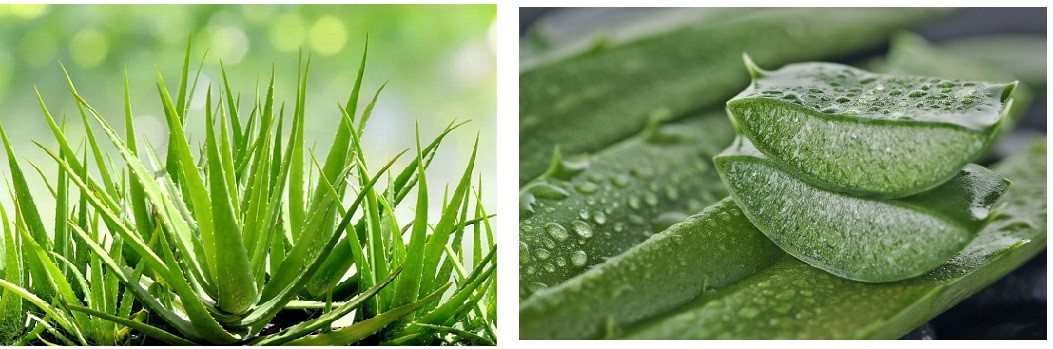
Fig. 1 The photo of Aloe vera L. Fig. 2 The photo of Aloe vera leaf
Aloe Vera Health Benefits
What Are Aloe Vera Side Effects?
1. Pregnancy or Breast-Feeding
There is a report that Aloe is associated with miscarriage. It could also be a risk for birth defects. So, do not take Aloe by mouth if you are pregnant or breast-feeding.
2. Children
Using Aloe gel topically might be safe if used correctly. However, oral use of Aloe latex and Aloe whole leaf extract by children is not recommended; Children younger than 12 years old might have diarrhea, stomach pain, and cramps.
3. Diabetes
Some researchers suggest that Aloe might lower blood sugar. Thus, diabetic patients should monitor their blood sugar levels closely if they take Aloe orally.
4. Intestinal Conditions such as Crohn's Disease, Obstruction or Ulcerative Colitis
Do not take Aloe latex if you have any of the above- mentioned conditions. Aloe latex is a bowel irritant. Remember, any product made from Aloe whole leaves contains some Aloe latex.
5. Hemorrhoids
Do not take Aloe latex if you have hemorrhoids. It could make the condition worse.
Remember, any product made from Aloe whole leaves contains some Aloe latex.
6. Kidney Problems
High doses of Aloe latex have been associated with kidney failure and other serious problems.
7. Surgery
Aloe might affect blood sugar levels. As a result, it could interfere with blood sugar control during and after surgery. So, stop using Aloe at least 2 weeks before a scheduled surgery. (14)
8. Long-Term Use of Aloe:
- Prolonged use of Aloe may lead to pigmentation in the intestinal mucosa, a harmless side effect which usually reverses upon discontinuation of the drug. Long-term use can also lead to albuminuria and hematuria.
- Hypersensitivity (dermatitis) has been reported after long-term use of oral and topical Aloe preparation.
- Long-term use can cause loss of electrolytes, in particular potassium.
- Chronic use with high doses of Aloe reduces vasoactive intestinal peptide and somatostatin levels, which may damage enteric nervous tissue. (15)
Nutritional Information
Many factors can affect the nutrients composition of Aloe vera, such as the species and edaphoclimatic conditions. Generally, Aloe vera contains water, total lipids, fatty acids, sterols, protein, soluble sugars, polysaccharides, dietary fibre, and vitamins. (1)
Aloe Vera Daily Dosage
The recommended single dosage is 0.05 gr Aloe powder in the evening. (15)
The following oral doses have been studied in scientific research:
- For constipation: 100-200 mg of Aloe or 50 mg of Aloe extract taken in the evening.
- For diabetes: The most effective dose and form of Aloe are not clear. Multiple doses and forms of Aloe (including powder, extract, and juice) were studied for 4 to 14 weeks; they used 100-1000 mg of Aloe powder and 15-150 ml of Aloe juice per day.
- For oral submucous fibrosis: They used 30 ml of pure Aloe vera juice twice a day and applied pure Aloe vera gel to lesions three times a day for 3 months.
- For weight loss: They used a specific Aloe gel product containing 147 mg of Aloe twice a day. (14)
Bioactive Compounds
The parenchymatous cells, in the fresh leaves of Aloe Vera, secrete a colorless mucilaginous gel that contains 98-99% water and 1-2% active compounds like Aloesin, Aloin, Aloe-emodin, Aloe-mannan, Flavonoids, Saponin, Sterols, Amino acids and Vitamins, Free Anthroquinones, and their derivatives like Isobarbaloin, Barbaloin-IO-Aloe emodin-9 anthrone, and chromones. Carbohydrates are the main component of Aloe gel; the main carbohydrates of Aloe vera are mannose, rhamnose, arabinose, glucose, galactose, acemannan, and xilose.
Best Time to Consume
For constipation: In the evening before
For weight loss: During the day.
Possible Drug Interactions
1. Cardiac Glycosides and Antiarrhythmic Drug
Chronic use of Aloe can lead to potassium loss, which can increase the actions of cardiac glycosides and antiarrhythmic drugs.
2. Thiazide diuretics, Loop Diuretics, Licorice and Corticosteroids
Using Aloe along with the above-mentioned agents increase the risk of potassium deficiency (hypokalemia). (15)
3. Also, the following oral medications are known to interact with Aloe:
- Digoxin (Lanoxin)
- Antidiabetes drugs: glimepiride, glyburide, insulin, pioglitazone, rosiglitazone, chlorpropamide, glipizide, tolbutamide.
- Sevoflurane (Ultane)
- Stimulant laxatives: bisacodyl (Correctol, Dulcolax), cascara, castor oil (Purge), senna (Senokot).
- Warfarin (Coumadin)
- Diuretic drugs: chlorothiazide (Diuril), chlorthalidone, and hydrochlorothiazide. (14)
Traditional Use
Chinese Medicine:
The most common use in Chinese medicine is for treatment of fungal diseases.
Indian Medicine:
Uses in Indian medicine include stomach tumors, constipation, colic, skin diseases, amenorrhea, worm infestation, and infections.
Unproven Uses: European folk medicine
In European folk medicine, the drug is employed for its ability to influence digestion.
Some Questions about Aloe Vera
References
1- https://www.sciencedirect.com/
2- https://www.ncbi.nlm.nih.gov/
3- http://www.obesityresearchclinicalpractice.com/
4- https://synapse.koreamed.org/
5- https://www.ncbi.nlm.nih.gov/
7- http://www.desertharvest.com/
8- https://www.researchgate.net/
9- http://www.phytojournal.com/
11- https://www.ncbi.nlm.nih.gov/
13- https://academicjournals.org/
15- (2000). PDR for herbal medicines. 2nd ed. Montvale, NJ: Medical Economics Company.