Ajwain
Discover the natural plants and herbs used in our products
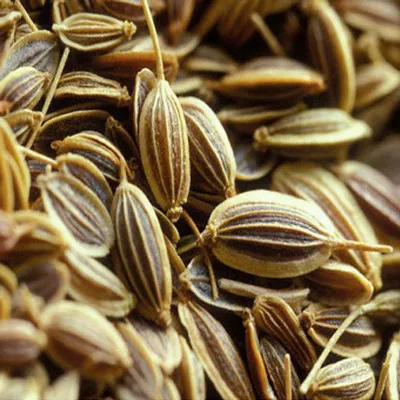
Ajwain
Ajwain seeds infusion is used traditionally for flatulence, dyspepsia, diarrhea, abdominal pains, lack of appetite, asthma, and amenorrhoea.
Benefits & Properties
Common Name: Ajwain
Scientific Name: Trachyspermum ammi L.
History and Origin
Ajwain most probably originated in Egypt; however, it is currently
cultivated across the Middle East. This ancient plant has been used as medicine
just like many other spices.
Ajwain Plant Structure
Ajwain is an evergreen, branched, aromatic and herbaceous plant, with a height of up to 90 cm, with soft fine hair, branched leafy stems, feather-like leaves 2–3 pinnately divided, segments linear with flowers terminal and compound. Fruits are small, ovoid, and muricate, around cremocarps, 2–3 mm long, with grayish-brown compressed mericarps and distinct five ridges and tubercular surface. (1)
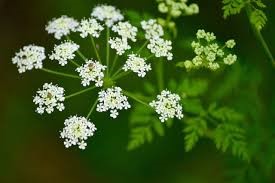
Fig. 1 The photo of T. ammi
Ajwain Health Benefits
What Are Ajwain Side Effects?
1. Pregnancy and Breast-Feeding
Ajwain seeds can cause the uterus to contract, and this might threaten the pregnancy. It is also best to avoid using Ajwain seeds if you are breast-feeding. There is not enough information to make sure whether it is safe for a nursing infant or not.
2. Liver Disease
There is some evidence that Ajwain seeds might worsen some kinds of liver diseases.
3. Surgery
Ajwain seeds might slow blood clotting. There is a concern that it might increase the risk of bleeding during and after surgery. So, stop using Ajwain seeds at least 2 weeks before a scheduled surgery. (11)
Generally, every person may be allergic to certain herbs and spices. This sensitivity must be first diagnosed by the person and secondarily by the physician. However, these allergic reactions do not cause chronic or acute side effects, and after identifying the allergenic plant and removing it from the diet, allergy-related complications will be eliminated. No company or product can be aware of the allergic reactions of different bodies in advance. The body's incompatibility with one or more specific herbs rarely occurs, but consumers may encounter it anyway.
Nutritional Information
As reported by a study, Ajwain seeds contain fiber, carbohydrate,
glycosides, tannins, moisture, protein, fat, saponins, flavones and minerals such
as phosphorus, calcium, nicotinic acid and iron. (12)
Ajwain Daily Dosage
Ajwain seeds dosage varies according to the health condition, age, and symptoms. The general dosage is as follows:
|
Ajwain Seeds Daily Dosage |
|
|
Culinary use |
1 to 3 grams |
|
Infusion (Water extract of Ajwain seeds) |
10 to 100 mg |
|
Therapeutic dosage |
2 to 4 grams (11) |
Long-term use or overdose of Ajwain can lead to queasiness, dizziness, loss of appetite, headache or sleep disorders. Very high dosages, corresponding to over 100 mg Ajwain, may cause elevated levels (reversible) of liver enzymes in blood plasma. (13)
Bioactive Compounds
Thymol, Cymene, Alpha-Pinene, Dipentene, Gamma-Terpinene,
Beta-Pinene, Myrcene, Carvacrol, Terpinene-4-ol, Carvone, Limonene, Dillapiole,
Oleic acid, Linoleic acid, Palmitic acid and Petroselinic acid.
Best Time to Consume
1-2 hours before or after meals.
Possible Drug Interactions
1. Medications that are Changed and Broken Down by the Liver
The liver is responsible for processing the medications. Therefore, some medications are changed and broken down by the liver before they can take effect.
Since Ajwain seeds might decrease how quickly the liver breaks down some medications, taking Ajwain seeds along with those medications can increase their side effects. Thus, if you are taking any medications that are changed by the liver, talk to your health care provider before taking Ajwain seeds. Some of these medications are lovastatin (Mevacor), itraconazole (Sporanox), triazolam (Halcion), fexofenadine (Allegra) and ketoconazole (Nizoral).
2. Medications that can harm the liver (Hepatotoxic drugs)
Some medications that can harm the liver include acetaminophen (Tylenol), amiodarone (Cordarone), carbamazepine (Tegretol), isoniazid (INH), methotrexate (Rheumatrex), fluconazole (Diflucan), itraconazole (Sporanox), methyldopa (Aldomet), phenytoin (Dilantin), lovastatin (Mevacor), pravastatin (Pravachol) , simvastatin (Zocor) and erythromycin (Erythrocin).
3. Medications that Slow Blood Clotting
Ajwain might slow blood clotting. So, taking it along with medications that slow blood clotting might increase the risk of bruising and bleeding. Some of these medications are aspirin, diclofenac (Voltaren, Cataflam), heparin and warfarin (Coumadin), naproxen (Anaprox, Naprosyn), dalteparin (Fragmin), enoxaparin (Lovenox), ibuprofen (Advil, Motrin), clopidogrel (Plavix).
4. Medications that Cause Photosensitivity
Some medications can cause photosensitivity. Since Ajwain seeds might also cause photosensitivity, taking it along with those medications might increase the risk of sunburn, blistering or rashes on areas of skin exposed to sunlight.
So, when you take Ajwain along with medications that cause photosensitivity, make sure to wear sunscreen and sun-safe clothing when spending time outdoors (in the sun). Some of these medications are amitriptyline, norfloxacin, ciprofloxacin, lomefloxacin, ofloxacin, levofloxacin, sparfloxacin, moxifloxacin, gatifloxacin, trimethoprim/sulfamethoxazole, tetracycline, methoxsalen and Trioxsalen. (14)
Traditional Use
The fruit possesses stimulant, antispasmodic, and carminative properties. It is used traditionally as an important remedial agent for flatulence, atonic dyspepsia, diarrhea, abdominal tumors, abdominal pains, piles, and bronchial problems, lack of appetite, galactagogue, asthma, and amenorrhoea. (15)
Some Questions about Ajwain
References
1. https://www.sciencedirect.com/
2. https://www.thehealthsite.com/
3. https://www.researchgate.net/
4. https://www.researchgate.net/
9. https://www.researchgate.net/
10. https://www.sciencedirect.com/
11. https://www.ayurtimes.com/
12. https://www.researchgate.net/
13. (2000). PDR for herbal medicines. 2nd ed. Montvale, NJ: Medical Economics Company.
15. https://www.ncbi.nlm.nih.gov/