Chamomile
Discover the natural plants and herbs used in our products
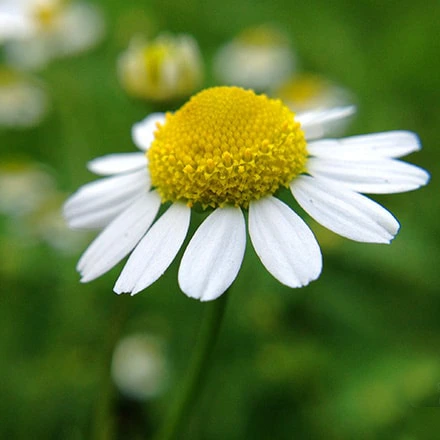
Chamomile
The chamomile flower is known as “the star among medicinal species”. A cup of chamomile tea is useful for treating indigestion, nausea, diarrhea, and insomnia.
Benefits & Properties
Common Name: German Chamomile
Scientific Name: Matricaria chamomilla var. recutita (L.)
History and Origin
The Compositae (Asteraceae) family includes the well-known medicinal plant species chamomile, which is sometimes referred to as "the star among medicinal species." Even though chamomile is native to southern and eastern Europe, it is also cultivated in Yugoslavia, Brazil, Germany, France, and Hungary. Additionally, it may be found in North Africa, South and North America, Asia, Australia, and New Zealand.
Since ancient times, German chamomile has been used for herbal remedies and was well-known in Greece, Egypt, and Rome. The Anglo-Saxons believed that this herbaceous plant was one of the nine holy herbs that the Lord had given to humanity. (1) Because of its apple-like scent, the term "chamomile" is derived from two Greek words that mean "ground apple." (3) Decades of conventional and scientific usage and studies have shown its nutritional, cosmetic, and multitherapeutic properties. It may be found in 26 different pharmacopoeias.
German chamomile is the fifth-top-selling herb in the world and has significant economic worth due to its wide range of medicinal uses. There are several uses for the blue essential oil found in M. chamomilla flowers.
For use in herbal teas, dried chamomile flowers are also quite popular. Consequently, the plant can be purchased as a flower head or blue oil. Chamomile oil is known commercially as "blue oil" on the international market. (1)
Essential oils and infusions can be found in a variety of commercial products, such as detergents, lotions, soaps, perfumes, ointments, hair products, confections, herbal teas, and baked goods. (2)
Chamomile Plant Structure
German chamomile is an annual plant (1) that grows best in a light, sandy loam with abundant moisture at pH 6. (5) It has thin, spindly roots that only penetrate the soil flatly. The stem is upright and strongly branched, reaching a height of 10-80 cm. The bi- to tripinnate leaves are long and narrow. (1) Its flowers are daisy-like, with white petals and yellow centers. (6) The golden yellow tubular florets with 5 teeth are 1.5–2.5 mm long. The 11–27 white petals, arranged concentrically, range in size from 6–11 mm in length and 3.5 mm in width.
The receptacle has a width of 6–8 mm. Flat at first and conical, cone-shaped later, hollow (a key distinguishing feature of Matricaria, including German chamomile), and free of paleae. The fruit is an achene that is yellowish-brown in color. The medicinal parts of German chamomile consist of the entire flowering herb or only the flowers. (4)
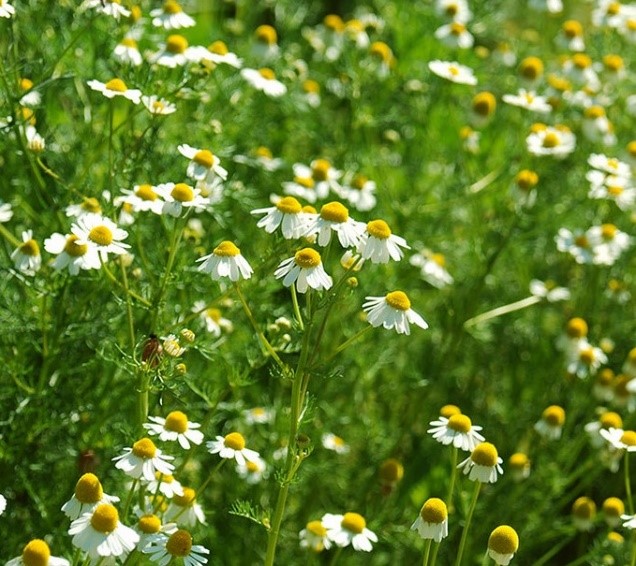
Fig. 1 The photo of Matricaria chamomilla
Chamomile Health Benefits
What Are Chamomile Side Effects?
1. When Consumed by Mouth: German chamomile is likely safe when consumed in amounts found in food. When used orally as a medication for brief periods, it is possibly safe.
2. When Applied to the Skin: German chamomile is possibly safe when applied to the skin.
It may, however, induce allergic skin reactions. German chamomile can cause eye irritation when applied to the area around the eyes.
3. Pregnancy and Breastfeeding: There isn't enough trustworthy information to say whether German chamomile is safe to use while pregnant or breastfeeding. Therefore, avoid it to be safe.
4. Children: German chamomile is possibly safe as a short-term medication, whether taken orally or used topically.
Early research shows that:
- Several products containing German chamomile are safe for young children to use orally for up to one week.
- For up to six weeks, children and teens may safely apply German chamomile oil to their skin at night.
5. Hormone-Sensitive Conditions such as Ovarian Cancer, Breast Cancer, Uterine Cancer, Uterine Fibroids, or Endometriosis: German chamomile may have physiological effects similar to those of estrogen. Avoid using German chamomile if you have any conditions that could be worsened by exposure to estrogen.
6. Surgery: German chamomile and surgical anesthetics may interact. Therefore, stop using it at least two weeks before your planned operation.
7. Allergies to Ragweed or Related Plants: German chamomile may cause an allergic response in those who are allergic to plants in the Asteraceae/Compositae family. Ragweed, daisies, marigolds, chrysanthemums, and many more herbs are all members of this family. (22)
A case report indicates chamomile may precipitate severe anaphylactic reactions in patients with hay fever and bronchial asthma caused by a variety of pollens. (4)
Generally, every person may be allergic to certain herbs and spices. This sensitivity must first be diagnosed by the person and, secondarily, by the physician. However, these allergic reactions do not cause chronic or acute side effects, and after identifying the allergenic plant and removing it from the diet, allergy-related complications will be eliminated.
No company or product can be aware of the allergic reactions of different bodies in advance. The body's incompatibility with one or more specific herbs rarely occurs, but consumers may encounter it anyway.
Nutritional Information
Nutritional analysis of chamomile dried flower powder showed that the powder contains moisture, fiber, ash, macronutrients (including protein, fat, and carbohydrate), and micronutrients including vitamin C and minerals (iron, zinc, and calcium). (23)
Chamomile Daily Dosage
A single dose is approximately 3 g as an infusion.
An infusion is prepared by pouring one cup (150 mL) of boiling water over 3 g of chamomile. One cup of freshly made tea is administered 3–4 times daily. (4)
Bioactive Compounds
It has been determined that chamomile has 120 different chemical components, such as coumarins, flavonoids, and terpenoids. Active chemical constituents of German chamomile include:
Terpenoids: α-bisabolol, α-bisabolol oxide A and B, chamazulene, sesquiterpenes;
Flavonoids: apigenin, luteolin, quercetin;
Coumarins: umbelliferone;
Spiroethers: en-yn dicycloether;
Other constituents are anthemic acid, choline, tannin, and polysaccharides. (3)
German chamomile flowers have 0.24% to 2.0% blue-colored volatile oil (essential oil). The age and place of origin of the flowers affect yield. The European Pharmacopoeia recommends chamomile contain no less than 4 mL/kg of blue essential oil.
The two main components, chamazulene and alpha-bisabolol, make up 50–65% of the volatile oil content overall. (6)
In another study, it was found that chamazulene and bisabolol comprise about 5% and 50% of German chamomile’s essential oil, respectively. (3)
Chamazulene provides a blue color to the oil; chamazulene is not present in the raw flower head but forms during distillation from matricin. (5) The best way to preserve chamazulene and bisabolol is in an alcoholic tincture since they are very unstable. (11)
Best Time to Consume
1-2 hours before or after meals.
As a mild tranquilizer and sleep-inducer, one cup of chamomile tea about 45 minutes before bed. (24)
For reducing blood glucose levels, one cup of chamomile tea immediately after meals. (25)
Possible Drug Interactions
1. Birth Control Pills (Contraceptive Drugs): Estrogen is included in certain birth control tablets. German chamomile may possess some properties similar to estrogen. However, it is not as potent as birth control tablets' estrogen. Combining German chamomile with birth control pills may make them less effective.
Ethinyl estradiol and levonorgestrel (Triphasil), ethinyl estradiol and norethindrone (Ortho-Novum 1/35, Ortho-Novum 7/7/7), and other combinations are birth control tablets.
2. Estrogens: Although German chamomile is not as potent as estrogen tablets, it may have some of the same effects when taken in large quantities. If estrogen tablets are taken with German chamomile, the effects of the pills may be lessened.
Conjugated estrogens (Premarin), estradiol, ethinylestradiol, and other compounds are included in several estrogen tablets.
3. Drugs Altered by the Liver (Substrates of Cytochrome P450 3A4 (CYP3A4)) / Substrates of Cytochrome P450 1A2 (CYP1A2)): The liver changes and breaks down several drugs. German chamomile may slow down the rate at which the liver breaks down these drugs. Taking it along with some of these medications can increase their effects and side effects. Therefore, consult your doctor before taking German chamomile if you are taking any drugs that are affected by the liver. Some medications changed by the liver include:
CYP3A4 substrates: triazolam (Halcion), lovastatin (Mevacor), fexofenadine (Allegra), ketoconazole (Nizoral), itraconazole (Sporanox), and a number of others.
CYP1A2 substrates: verapamil (Calan, Isoptin, etc.), theophylline (Theo-Dur, etc.), ondansetron (Zofran), amitriptyline (Elavil), propranolol (Inderal), haloperidol (Haldol), and others.
4. Sedative Medicines (CNS Depressants and Benzodiazepines): German chamomile might cause sleepiness and drowsiness. Sedatives are drugs that make you feel drowsy. Thus, combining German chamomile with sedative drugs may result in excessive sleepiness.
Pentobarbital (Nembutal), phenobarbital (Luminal), secobarbital (Seconal), morphine, zolpidem (Ambien), fentanyl (Duragesic, Sublimaze), and other drugs are examples of CNS depressants. Triazolam (Halcion), alprazolam (Xanax), diazepam (Valium), temazepam (Restoril), clonazepam (Klonopin), and midazolam (Versed) are benzodiazepines.
5. Tamoxifen (Nolvadex): Hormones in the body can have an impact on some cancer types. Cancers that are impacted by the body's estrogen levels are known as estrogen-sensitive cancers. Tamoxifen, also known as Nolvadex, is used to treat and prevent certain cancers. German chamomile appears to have an impact on the body's estrogen levels as well. Therefore, it might decrease the effectiveness of tamoxifen (Nolvadex). So, if you are taking tamoxifen (Nolvadex), avoid using German chamomile.
6. Warfarin (Coumadin): This medication is intended to reduce the rate at which blood clots. German chamomile may boost its effects. Therefore, combining warfarin (Coumadin) and German chamomile together may reduce blood clotting too much and result in bleeding and bruises. (22)
Traditional Use
Chamomile is extensively consumed as a tea or tonic. It is used internally to treat anxiety, hysteria, convulsions, nightmares, insomnia, and other sleep problems.
One of chamomile’s main roles is as a multipurpose digestive aid to treat gastrointestinal disturbances, including flatulence, indigestion, diarrhea, anorexia, motion sickness, nausea, and vomiting.
It is used to treat colic, croup, and fevers in children and as an emmenagogue and uterine tonic in women. (3)
In the sixth century, it was used to treat back pain, neuralgia (pain in a nerve pathway), rheumatism, skin conditions, headaches, and gout. (4)
Some Questions about Chamomile
References
1. https://www.ncbi.nlm.nih.gov/
2. https://www.researchgate.net/
3. https://tratamientocelular.com/
4. PDR for herbal medicines. (2000). 2nd ed. Montvale, NJ: Medical Economics Company
5. Tucker, A. O., DeBaggio, T. (2009). The Encyclopedia of Herbs: A Comprehensive Reference to Herbs of Flavor and Fragrance. United States: Timber Press.
6. https://www.researchgate.net/
7. https://www.scitepress.org/
8. https://www.ncbi.nlm.nih.gov/
9. https://www.researchgate.net/
10. https://onlinelibrary.wiley.com/
11. https://www.ncbi.nlm.nih.gov/
12. https://www.researchgate.net/
13. https://link.springer.com/
15. https://link.springer.com/
16. https://www.sciencedirect.com/
17. https://pubmed.ncbi.nlm.nih.gov/25194428/
19. https://pdfs.semanticscholar.org/
20. https://www.mattioli1885journals.com/
21. https://www.researchgate.net/
23. https://www.researchgate.net/
25. https://www.bbcgoodfood.com/
26. https://www.ncbi.nlm.nih.gov/
27. https://iranjournals.nlai.ir/
28. https://www.omjournal.org/images/667_M_Deatials_Pdf_.pdf
29. https://pubmed.ncbi.nlm.nih.gov/31269882/
30. https://pubmed.ncbi.nlm.nih.gov/31269882/
31. https://link.springer.com/article/10.1007/s00403-009-0931-0
32. http://jams.arakmu.ac.ir/browse.php?a_id=6060&sid=1&slc_lang=en&html=1
33. https://clinicaltrials.gov/ct2/show/NCT04207281
34. https://www.ncbi.nlm.nih.gov/pmc/articles/PMC2995283/