Rosemary
Discover the natural plants and herbs used in our products
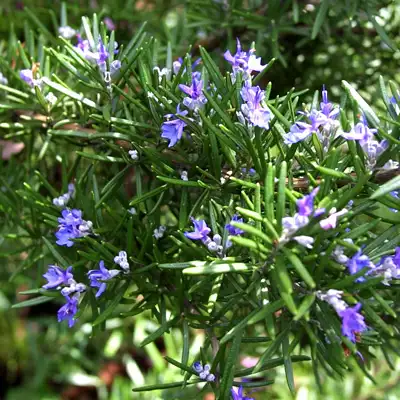
Rosemary
Rosemary is high in antioxidants and anti-inflammatory compounds, which is used to improve blood circulation, digestion, high blood pressure, and rheumatism.
Benefits & Properties
Common Name: Rosemary
Scientific Name: Rosmarinus officinalis L.
History and Origin
Rosemary is a perennial aromatic plant with evergreen needle-shaped leaves. Its flowers are white, pink, or blue. The leaves and flowered branches are its usable parts. Although, it is native to Mediterranean regions, at the present time, it grows in most of the temperate areas of Europe and America. This herb has been used as spice and medicine for centuries. Part of the popularity of this plant, that is also called “memorial plant”, is due to a belief that it improves the memory.
In ancient Greece, students put little rosemary branches in their hair while studying their lessons. Also in England, the ability of this plant in improving memory has changed it as a symbol of health. Its oil was extracted in 14th century for the first time, and in 16th and 17th centuries, it was used a lot to help digestion. Today, rosemary has many culinary and medicinal uses all around the world.
Rosemary Health Benefits
1. Regulating Blood Glucose Levels
In an experiment, rosemary reduced the level of blood glucose in human subjects. According to researchers, regeneration of beta cells in pancreas and increasing insulin secretion from these cells caused by consuming rosemary can be the mechanisms of the effect of this plant on reducing blood glucose. It can prevent intestinal glucose absorption by inhibiting intestinal alpha amylase and alpha- glycosides enzymes.
2. Regulating Blood Cholesterol Levels
In a study, published in International Journal of Clinical Medicine, consuming it could decrease lipid peroxidation and improve lipid profile in human. Reduction of total cholesterol and LDL after the consumption of rosemary can be due to inhibiting pancreatic lipase and hormone-sensitive lipase by the plant’s bioactive compounds, especially Rosmarinic acid and other phenolic compounds. The reason for this reduction can be the presence of saponins which make an insoluble complex with cholesterol, and increase fecal lipid excretion.
3. Improving Memory Function
In an experiment, consuming dried powder of rosemary leaf in low doses resulted in enhancing cognitive function in elderlies. Researchers believe that Rosmarinic acid, carnosic acid and ursolic acid residing in the herb can be the reason for the positive impact of this plant on cognitive function. The results of this study were published in the Journal of Medicinal Food.
This plant can also improve the spatial memory. Hippocampus learning center of the brain which has an important role in brain functioning and forming spatial memory part of the overall system of memory which plays role in learning by memorization and recalling is so vulnerable to oxidative stress, and reduction of oxidative stress caused by its consumption improves brain functioning.
4. Anti-Allergy
Rosmarinic acid is one of the effective components of Rosemary. In a study it was observed that using the extract of Perilla frutescens enriched with rosmarinic acid had a positive effect on patients with seasonal allergic rhinoconjunctivitis allergy along with fatigue, cough and eye symptoms. In an experiment applying rosmarinic acid, it reduced pruritus nose, rhinorrhea, eye pruritus and total symptoms of allergy. In a research, researchers mentioned the inhibitory effect of rosmarinic acid on T cells’ activity as a reason for its healing effect(s) t on this disease.
5. Regulating Blood Pressure
Researchers believe that rosemary can reduce blood pressure via its inhibitory effect on ACE, an enzyme involved in increasing blood pressure. Rosmarinic acid can have vasodilator effect through activation of nitric oxide pathway.
6. Improving Liver Function
In an experiment conducted in 2015, the levels of serum alanine aminotransferase, aspartate aminotransferase, gamma glutamyl transferase, alkaline phosphatase and total bilirubin were significantly increased after treating Wistar male rats with thioacetamide, and consuming rosemary leaf extract had a protective effect in rats with thioacetamide-induced liver cirrhosis. According to the results of this study, the hepatoprotective effects of the extract may be due to its antioxidant features.
7. Improving Stomach Function
Consumption of rosemary tea resolves flatulence and heartburn. It is used for treating heartburn, constipation, and flatulence. The healing effect of this herb on stomach is due to its anti-inflammatory property. In a study published in FASEB in 2014, researchers investigated the effect of its leaf aqueous extract on gastric acid secretion in isolated stomach of adult male rats. The results of this study revealed the healing effect of the extract, having antioxidant and anti-inflammatory properties, on gastric ulcer. In this study, increasing the secretion of basal gastric acid following the consumption of this extract resulted in improving digestion.
What Are Rosemary Side Effects?
1. When taken by mouth: Generally, no health hazards or side effects are known in conjunction with the proper administration of designated therapeutic dosages.
* Contact allergies have been observed on occasion.
2. Pregnancy: Not to be used during pregnancy. Very large quantities of rosemary leaves misused for the purpose of abortion, can lead to deep coma, spasm, vomiting, gastroenteritis, uterine bleeding, kidney irritation, and to death in humans.
3. Aspirin allergy: Rosemary contains a chemical that is very similar to aspirin. This chemical, known a as salicylate, may cause a reaction in people who are allergic to aspirin.
4. Bleeding disorders: Rosemary might increase the risk of bleeding and bruising in people with bleeding disorders. Use cautiously.
5. Seizure disorders: Rosemary might make seizure disorders worse. Don’t use it.
Generally, every person may be allergic to certain herbs and spices. This sensitivity must be first diagnosed by the person and secondarily by the physician. However, these allergic reactions do not cause chronic or acute side effects, and after identifying the allergenic plant and removing it from the diet, allergy-related complications will be eliminated. No company or product can be aware of the allergic reactions of different bodies in advance. The body's incompatibility with one or more specific herbs rarely occurs, but consumers may encounter it anyway.
Rosemary Daily Dosage
To make a tea, pour boiling water over 2 gm finely cut the herb and strain after 15 minutes (1teaspoon corresponds to approximately 2 gm of the herb).
Bioactive Compounds
Caffeic acid derivatives (Rosmarinic acid), Diterpenes (Carnosolic acid, Isorosmanol, Rosmadial, Rosmaridiphenol and Rosmariquinone), Flavonoids (Hesperidin, Diosmin, Cirsimarin), Triterpenes (Ursolic acid and Oleanolic acid), Volatile Oil (1,8-Cineole, Alpha-Pinene, Camphor, Borneol, Camphene, Limonene, P-Cymene, Myrcene, Linalool, Alpha-Terpineol).
Best Time to Consume
1-2 hours before or after meals.
Possible Drug Interactions
We currently have no information for Rosemary Interactions.
Traditional Use
In traditional medicine, Rosemary is used to treat indigestion, depression, headache and cough. Its tea cleans stomach and improves appetite. It has antiseptic and sweating effects and increases bloodstream in abdominal organs. This plant is diuretic, anti-flatulence, anti-inflammatory and pain killer and is so useful in stimulating secretion of gastric and gall juice.