Black Barberry
Discover the natural plants and herbs used in our products
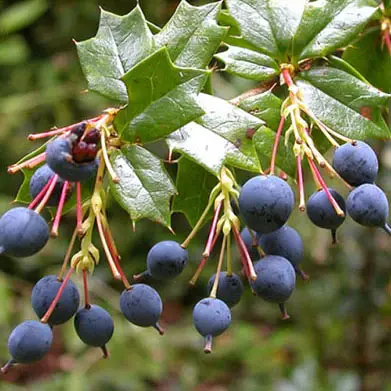
Black Barberry
Black barberry or “Zereshk” is the fruit of a spiny shrub in the Berberidaceae family. It is traditionally used for high blood pressure, fever, and indigestion.
Benefits & Properties
Common Name: Black Barberry
Scientific Name: Berberis integerrima Bunge
History and Origin
Berberis most likely originated in Palaeocene in East Asia. The genus has mainly diversified in two main areas: Asia (or Eurasia), and South America. Common barberry origin is Asian, most likely to be of Middle and Western Asiatic mountains. In some regions (e.g. United States), it is considered as an invasive and noxious weed. Integrifolious barberry (B. integerrima) is distributed over many parts of Iran. It is also found in Uzbekistan and Kyrgyzstan, Kazakhstan, Tajikistan, Iraq, Turkey, Turkmenistan, Afghanistan, Pakistan, Kashmir, and Northwest of China. The background of barberry or “zereshk” cultivation in Iran dates back to two centuries ago. (1)
Berberis is the Arabic name of the fruit that signifies a shell because as believed by many authors, the leaves are glossy like the interior part of an oyster shell. It seems that the name berbery has been applied to this fruit by Averroes (an Arabic writer on medicines). (2)
Black Barberry Plant Structure
Barberry belongs to the family of Berberidaceae. It includes about 650 species worldwide. (3) The various species of barberry are well-known in different parts of the world, such as Iran, China, Middle Asia, and in many European, African and American countries. (4)
Black barberry is a spiny shrub with yellow woods, obovate leaves, and small, red, oval fruits with two or three oblong seeds. (3)
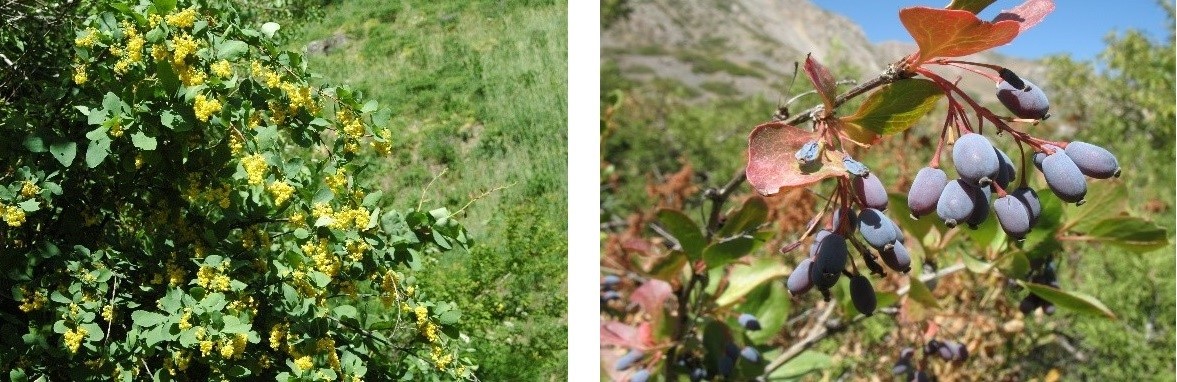
The photo of Berberis Integerrima The photo of black barberry fruit
Black Barberry Health Benefits
What Are Black Barberry Side Effects?
1. Children
Barberry is Likely SAFE when consumed orally by adolescents aged 12-17 for up to 4 weeks. Barberry is likely UNSAFE for newborn babies when taken orally. It contains Berberine, which can cause brain damage, particularly in premature babies who are jaundiced.
2. Pregnancy and Breast-Feeding
Don't take barberry orally if you are pregnant or breast-feeding. It is likely UNSAFE for your baby. The berberine in barberry can pass from a mother into her unborn child through the placenta during pregnancy. Brain damage has developed in newborn babies exposed to berberine compound.
Berberine, as well as other harmful chemicals in barberry, can be transferred to an infant through breast milk and may cause brain damage.
3. Bleeding Disorder
Barberry contains a chemical called berberine; it can slow blood clotting and increase the risk of bleeding. Barberry may theoretically worsen bleeding disorders.
4. Diabetes
One of the chemicals within barberry, called berberine, may lower blood sugar levels.
Diabetic patients, who use barberry in larger amounts than usual, should check any sign of low blood sugar (hypoglycemia) and monitor their blood sugar levels closely.
5. Low Blood Pressure
Barberry contains a chemical compound called berberine. Berberine might lower blood pressure. In theory, consumption of barberry by people with low blood pressure could significantly lower their blood pressure.
6. Surgery
Barberry contains a chemical called berberine. There are some concerns that berberine may lengthen bleeding, slow down the nervous system, inhibit blood sugar control during and after surgery.
So, stop taking barberry at least 2 weeks before a scheduled surgery. (21)
Nutritional Information
Black Barberry Daily Dosage
The standard dose of berberine is 900-2000 mg a day, divided into three to four doses. (23, 24)
Bioactive Compounds
Barberry fruit contains bioactive compounds such as berberine, berbamine, palmatine, malic acid, oxyacanthine, ascorbic acid, ursolic acid, caffeic acid, coumarin, beta- carotene, and tannin. (3)
Best Time to Consume
1-2 hours before or after meals.
Possible Drug Interactions
1. Cyclosporine (Neoral, Sandimmune)
The body breaks down cyclosporine (Neoral, Sandimmune) to get rid of it. Barberry may decrease how fast the body breaks down cyclosporine. This may result in excessive amount of cyclosporine (Neoral, Sandimmune) in the body and hence, its potential side effects.
2. Medications changed by the liver (Cytochrome P450 3A4 (CYP3A4) substrates)
Taking barberry along with some medications that are broken down by the liver can increase the effects and side effects of some medications.
So, if you are taking any medications that are changed by the liver, consult with your healthcare provider before consuming barberry.
Some medications changed by the liver include cyclosporin (Neoral, Sandimmune), clarithromycin (Biaxin), lovastatin (Mevacor), indinavir (Crixivan), sildenafil (Viagra) and triazolam (Halcion). (21)
Traditional Use
Iran traditional medicine has reported several properties, related to different parts of the barberry plant, such as anti-bacterial effects, anti-fever (febrifuge), itching relief, anti-high blood pressure, anti-arthritis (4) Barberry is also used to treat high blood pressure, fever, kidney diseases, diarrhea and indigestion. (1)
Some Questions about Black Barberry
References
1- https://www.researchgate.net/
2- https://www.researchgate.net/
4- https://www.ncbi.nlm.nih.gov/
5- http://daru.tums.ac.ir/index.php
6- https://www.ncbi.nlm.nih.gov/
7- https://www.researchgate.net/
9- https://www.ncbi.nlm.nih.gov/
10- https://www.ncbi.nlm.nih.gov/
11- https://www.researchgate.net/
12- http://jbums.org/article-1-3715-fa.pdf
13- http://www.sciencedirect.com/
14- https://www.ncbi.nlm.nih.gov/
15- https://www.ncbi.nlm.nih.gov/pubmed/18789680
16- https://bmccomplementalternmed.biomedcentral.com/
17- https://www.ncbi.nlm.nih.gov/
18- http://www.mdpi.com/1420-3049/19/5/6583/pdf
19- https://www.ncbi.nlm.nih.gov/pubmed/19172582
20- http://www.sciencedirect.com/
23- https://www.drugs.com/npc/barberry.html
24- https://examine.com/supplements/berberine/
25- https://www.sciencedirect.com/
26- https://onlinelibrary.wiley.com/
28- https://www.researchgate.net/
29- https://www.researchgate.net
30. https://www.google.com/89978449