Bitter Orange
Discover the natural plants and herbs used in our products
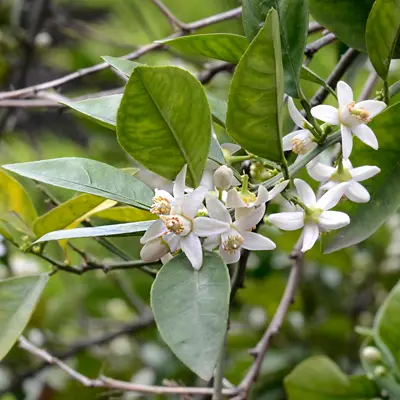
Bitter Orange
Bitter orange contains synephrine, a compound that is effective in reducing appetite. Inhalation of neroli essential oil reduces blood pressure.
Benefits & Properties
Common Name: Bitter Orange
Scientific Name: Citrus × aurantium L.
History and Origin
Bitter orange is native to Eastern Africa and the tropical regions of Asia. Today this tree grows across the Mediterranean region and some parts of the United States; orchards of bitter orange are found along the Mediterranean coast, particularly in Spain. It is thought to be introduced into Europe around the year 1200 by Arab tradesmen. During the 17th century, the Italians, the Spaniards, and the French used this plant extensively. The application of this plant dates back to ancient times. Ancient Greeks used it for disinfection in Aromatherapy (smell therapy) and herbal therapy.
Bitter Orange Plant Structure
Bitter orange, also called Seville orange, marmalade orange, bigarade orange, and sour orange, refers to a citrus tree (Citrus × aurantium) and its fruit. It belongs to the order Geraniales and the Rutaceae family.
A tree or rarely a shrub that its young shoots are glabrous and greenish-white:
The leaflets are 7.5 – 15 cm, long, elliptic or ovate, obtuse, acute or acuminate. The petioles are naked or winged; the wings are often obovate and nearly as large as the blade.
The flowers are bisexual and pure white, with 20-30 stamens.
The fruit is globose, generally oblate, not mammillate, usually orange-colored, rind loose, or adherent; the pulp is sweet, yellow, and rarely red. (1)
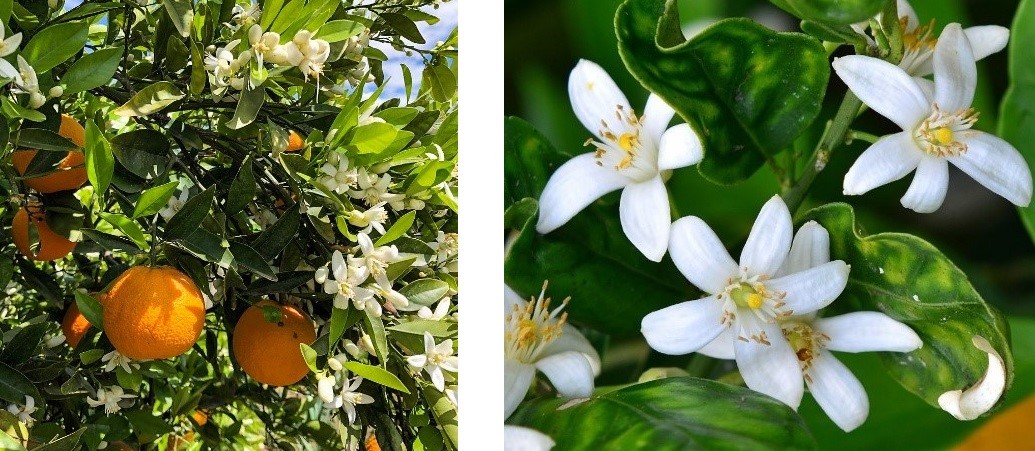
The photo of Citrus × aurantium L. The photo of bitter orange blossom
Bitter Orange Health Benefits
What Are Bitter Orange Side Effects?
No health hazards or side effects have been known in conjunction with the proper administration of designated therapeutic dosages but to be on the safe side, note the following: (5)
1. Pregnancy and Breast-Feeding
Bitter orange is Likely SAFE during pregnancy when used in reasonable amounts found in food. However, it is POSSIBLY UNSAFE and NOT RECOMMENDED when taken orally in medicinal amounts. The effects of bitter orange on breast-feeding infants are not known.
Thus, stay on the safe side and do NOT use bitter orange during pregnancy or breast-feeding.
2. Diabetes
Some evidence shows that bitter orange may interfere with blood sugar control in patients with type 2 diabetes.
Diabetic patients should use it with caution and monitor their blood sugar levels closely.
3. High Blood Pressure
Some studies suggest that bitter orange can increase blood pressure in healthy people, especially when taken with caffeine. However, other studies have found no such blood pressure elevation. Furthermore, to date, there have not been any studies looking at the effect of taking bitter orange orally in people with high blood pressure.
If you have high blood pressure, avoid using bitter orange, especially in combination with stimulants such as caffeine.
4. Glaucoma
Bitter orange might worsen glaucoma. Avoid using it if you have this condition.
5. Heart Disease
Consumption of bitter orange, especially in combination with caffeine or other stimulants, might increase the risk of serious side effects in people with long QT syndrome, a particular heart disorder.
6. Irregular Heartbeat (Heart Arrhythmia)
Some studies suggest that bitter orange, especially when taken with caffeine, may increase heart rate in healthy people. Other studies have found no evidence of such an effect on heart rate.
There have been no studies on the effects of bitter orange on people, who have an irregular heartbeat.
Avoid using bitter orange, if you have an irregular heartbeat, especially in combination with stimulants such as caffeine.
7. Surgery
Bitter orange acts like a stimulant. Thus, it may interfere with surgery by increasing heart rate and blood pressure. Stop the consumption of bitter orange at least 2 weeks prior to a scheduled surgery. (6)
Nutritional Information
Food value per 100 g of the edible portion of bitter orange is moisture, protein, fat, carbohydrates, fiber, ash, calcium, iron, phosphorus, vitamin A, thiamine, riboflavin, niacin, ascorbic acid. (7)
Bitter Orange Daily Dosage
Follow the manufacturer's dosage guidelines because synephrine content may vary in supplement formulations. (2)
Bioactive Compounds
The flower of Citrus aurantium contains some compounds like neohesperidin, synephrine, adenosine, asparagine, tyrosine, valine, isoleucine, alanine, beta-sitosterol, and beta-daucosterol.
Besides, the dried flowers contain Steroid- Desmosterol, Ergosterol, β-Sitosterol, Stigmasterol, and Saponins.
Alkaloid- caffeine was reported in dried flower extract.
Flower essential oil contains Monoterpene- b-limonene, Linalool, Linalool acetate.
Best Time to Consume
2 hours before or after meals.
Possible Drug Interactions
1. Medications for Depression (MAOIs)
Bitter orange contains chemicals that stimulate the body. Some anti-depression drugs, including phenelzine (Nardil) and tranylcypromine (Parnate), taken with bitter orange may increase these chemicals, which might cause serious side effects including fast heartbeat, high blood pressure, nervousness and even result in seizures.
2. Midazolam (Versed)
The body breaks down midazolam (Versed) very quickly in order to get rid of it. Bitter orange can slow down liver functionality to break down midazolam (Versed). Thus, taking bitter orange along with midazolam (Versed) might increase the effects and side effects of midazolam (Versed).
3. Caffeine (Excedrin, Anacin, Vivarin, and others)
Bitter orange is a stimulant like Caffeine. Their combination may result in higher blood pressure as well as increased heart rate, which can lead to some serious adverse side effects such as heart attack and stroke.
4. Dextromethorphan (Robitussin DM, and others)
The body breaks down dextromethorphan (Robitussin DM, others) very quickly in order to get rid of it. Bitter orange can slow down liver functionality to break down dextromethorphan (Robitussin DM, others). Thus, taking bitter orange along with dextromethorphan (Robitussin DM, others) might increase the effects and side effects of dextromethorphan (Robitussin DM, others).
5. Felodipine (Plendil)
Felodipine (Plendil) is used to lower blood pressure. The body breaks down felodipine (Plendil) very quickly in order to get rid of it. Bitter orange can slow down liver functionality to break down felodipine (Plendil). Thus, taking bitter orange along with felodipine (Plendil) might increase the effects and side effects of felodipine (Plendil).
6. Indinavir (Crixivan)
Indinavir (Crixivan) is used to treat HIV/AIDS. The body breaks down indinavir (Crixivan) very quickly in order to get rid of it. Bitter orange can slow down liver functionality to break down indinavir (Crixivan). Thus, taking bitter orange along with indinavir (Crixivan) might increase the effects and side effects of indinavir (Crixivan).
7. Medications changed by the liver (Cytochrome P450 3A4 (CYP3A4) substrates)
Taking bitter orange along with some medications that are broken down by the liver can increase the effects and side effects of some medications. Before taking bitter orange, talk to your healthcare provider if you are taking any medications that are changed by the liver.
Some medications changed by the liver include lovastatin (Mevacor), ketoconazole (Nizoral), itraconazole (Sporanox), fexofenadine (Allegra) and triazolam (Halcion).
8. Stimulant drugs
Taking bitter orange along with stimulant drugs might cause serious problems including increased heart rate and high blood pressure.
It is highly recommended NOT to consume stimulant drugs such as diethylpropion (Tenuate), epinephrine, phentermine (Ionamin), and pseudoephedrine (Sudafed) along with bitter orange. (9)
Traditional Use
In the Canary Islands, they used an infusion of dried flowers of C.aurantium var amara orally for influenza, insomnia, and as a tranquilizer.
Extract of dried flowers of C.aurantium var amara was taken orally as a cardiovascular analeptic in Tunisia.
Infusion of dried flowers was used orally for cold and antispasmodic in Brazil.
Infusion of flower and leaf was used orally as a sedative and digestive in Italy.
Infusion of dried flowers was used orally as a digestive in Spain.
Some Questions about Bitter Orange
References
1. https://www.researchgate.net/
4. https://scialert.net/abstract/
5. (2000). PDR for herbal medicines. 2nd ed. Montvale, NJ: Medical Economics Company.