Borage
Discover the natural plants and herbs used in our products
Borage
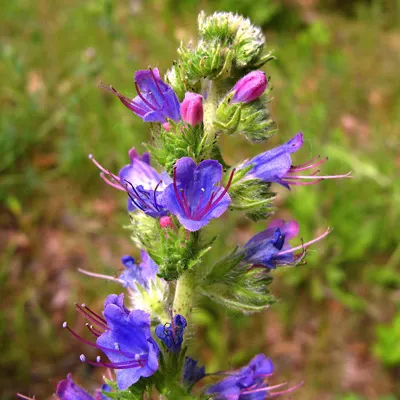
Borage with the scientific name of “Echium amoenum” is native to some parts of northern Iran and the Caucasus...
Benefits & Properties
Common Name: Borage
Scientific Name: Echium amoenum Fisch. & C.A.Mey.
History and Origin
Borage with the scientific name of “Echium amoenum” is native to some parts of northern Iran and the Caucasus. This plant is also found in many parts of Europe, West Asia, and North America and is often seen wildly (the plant that grows by itself without cultivating its seed) beside the rivers. In the early nineteenth century, they used young parts of the plant like its foliage cooked, or as a salad. Old botanists sometimes called this plant Bugloss.
According to some documentation, the Latin name of borage, i.e. Borago, is a distortion of the word corago (“cor” means heart and “ago” means the past). This name was due to the effect of this plant on the human heart. However, John Steve Henslow (1796-1861), a British botanist, believed that this word derives from barrach, a word from the ancient Irish language (Celtic) meaning a brave man.
Borage Plant Structure
Borage is a perennial herbaceous plant with alternate-leaves and long-stalked flowers. The flowers are star-shaped wheel or funnel-shaped. Echium amoenum (Iranian borage) is a hairy herb with russet-red and funnel-shaped flowers and lance-shaped dark green foliage. Its leaves and stems are covered in very fine hairs. As the flowers become mature, their color changes to become lighter pink and purple. After the drying process, they can be seen in violet-blue.
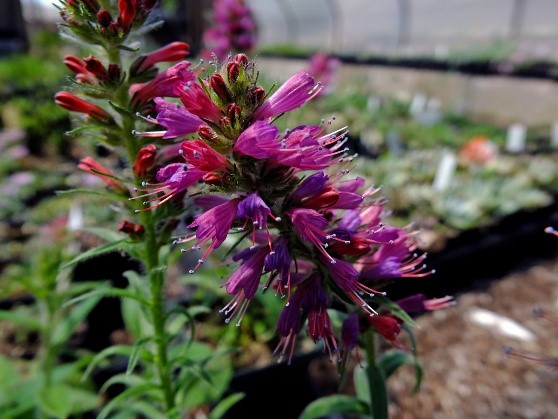
The photo of Echium amoenum
Borage Health Benefits
What Are Borage Side Effects?
1. Children
An appropriate dose of borage seed oil is POSSIBLY SAFE when consumed orally. However, borage seed oil can be UNSAFE when the products containing pyrrolizidine alkaloids (PA) are taken orally.
2. Pregnancy and Breast-Feeding
Borage seed oil is likely UNSAFE during pregnancy and while breast-feeding.
Avoid borage products that might contain pyrrolizidine alkaloids (PAs). PAs are a risk to mothers because they can cause serious liver disease and might be a cause for cancer; they are also a risk to infants because they might cause birth defects, and they can pass into breast milk.
Nevertheless, researchers are not sure if certified PA-free borage products are safe during pregnancy and breast-feeding.
Therefore, stay on the safe side and avoid using borage during pregnancy or breast-feeding.
3. Bleeding Disorders
There is some concern that borage seed oil might prolong bleeding time and subsequently increase the risk of bruising and bleeding.
If you have a bleeding disorder, take borage with caution.
4. Liver Disease
Borage products containing hepatotoxic pyrrolizidine alkaloids (PA) might worsen liver disease.
5. Surgery
Borage may increase the risk of bleeding during and after surgery.
So, stop consuming borage at least 2 weeks before a scheduled surgery. (5)
Nutritional Information
The herb contains many important phytonutrients, minerals, and vitamins that are essential for optimum health and wellness.
Evaluation of its nutritional composition showed the presence of calcium, phosphorus, iron, and Vitamin C. Furthermore, the extract contained carotenoids and anthocyanin. (6)
Borage Daily Dosage
A 2-gr dose of dried herb brewed in one cup of boiled water, taken 3 times a day, is recommended. (7)
Bioactive Compounds
Iranian borage has many effective compounds, such as tannin, mucilage, phenolic compounds (like rosmarinic acid, cyaniding, and delphinidin), sugar, flavonoid, and a small amount of alkaloid. This plant contains mucilage (3-5%), flavonoid (0.15%), and anthocyanin (13.43%) with delphinidin and cyaniding aglycones. The plant also contains an insignificant amount of pyrrolizidine alkaloid.
Best Time to Consume
2 hours before or after meals.
Possible Drug Interactions
1. Medications that increase the break down of other medications by the liver (Cytochrome P450 3A4 (CYP3A4) inducers)
Borage is broken down by the liver. Some chemicals that form, when the liver breaks down borage seed oil, can be harmful.
Medications which cause the liver to break down borage seed oil may enhance the toxic effects of chemicals contained in borage seed oil. Some of these medicines include carbamazepine (Tegretol), phenobarbital, phenytoin (Dilantin), rifampin, and rifabutin (Mycobutin).
2. Medications that slow blood clotting (Anticoagulant / Antiplatelet drugs)
Borage seed oil contains GLA (gamma-linolenic acid). GLA might slow blood clotting. Taking borage seed oil along with medications that slow blood clotting might increase the chances of bruising and bleeding.
Some medications that slow blood clotting include aspirin, warfarin (Coumadin), diclofenac (Voltaren, Cataflam), clopidogrel (Plavix), ibuprofen (Advil, Motrin), dalteparin (Fragmin), naproxen (Anaprox, Naprosyn), enoxaparin (Lovenox), heparin, and others.
3. Medications used during surgery (Anesthesia)
Borage seed oil might interact with medications used during surgery. So, consult with your GP about the natural products you are taking before your surgery.
Therefore, it is better to stop taking borage seed oil at least two weeks before surgery.
4. NSAIDs (Nonsteroidal anti-inflammatory drugs)
NSAIDs are anti-inflammatory medications used to decrease pain and swelling. Borage seed oil is also used as an anti-inflammatory medication. Sometimes NSAIDs and borage seed oil are consumed together for rheumatoid arthritis. However, borage seed oil seems to function differently from NSAIDs.
Some scientists propose that taking NSAIDs along with borage seed oil can weaken the impact of borage seed oil. Some NSAIDs include ibuprofen (Advil, Motrin, and Nuprin), indomethacin (Indocin), naproxen (Aleve, Anaprox, Naprelan, and Naprosyn), piroxicam (Feldene), and aspirin. (5)
Traditional Use
E. amoenum was called “Lesan al sour” in Iranian traditional medicine. Its temperament has been mentioned as warm and dry. In Iranian traditional medicine texts, the flowers are used for the treatment of concern, cough, dyspnea, sore throat, grippe, and pneumonia. There are also some other effects such as efficacy in melancholy, obsession, fear, and icterus mentioned for this plant. Its flowers are known as an exhilarant and a tonic for the heart, liver, spirit, and brain. It was also mentioned for the treatment of nephrolithiasis. (8)