Lavender
Discover the natural plants and herbs used in our products
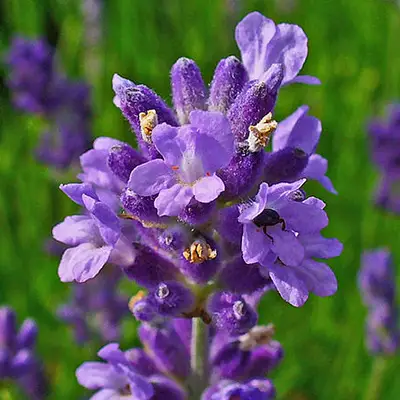
Lavender
Although lavender originated in the Mediterranean region (Spain, France, Italy, and Andorra), it is cultivated in many other countries, including Poland...
Benefits & Properties
Common Name: Lavender, English Lavender
Scientific Name: Lavandula angustifolia Mill
History and Origin
The Lavandula genus belongs to the Lamiaceae family and includes 39 species, with about 400 registered cultivars. They are worldwide plants that occur over the Mediterranean, Europe, North Africa, and southwest Asia to southeast India. (1) Although lavender originated in the Mediterranean region (Spain, France, Italy, and Andorra), it is cultivated in many other countries, including Poland. The name lavender is derived from “lavo, lavare” (a Latin verb) meaning to wash or to clean. (2)
Lavender Plant Structure
Lavender is an evergreen perennial plant, which grows to a height of 40–60 cm and forms compact, regular clumps. The lower part of its stem is woody, and the upper part is green. Lavender has linear or lanceolate leaves with curled edges and a highly branched fibrous root system. Its silver-green leaves are covered with tomentum, which protects them from strong sunshine, wind, and excessive water loss. Lavender's violet flowers grow in spikes, arranged in circles (3–5 flowers per circle) in the top part of the stem. There are also some varieties with white flowers (Alba and Nana Alba) and pink flowers (Rosea). Lavender grows on well-drained, fertile, and lime soils. It grows best in full sun with wind protection. (2)
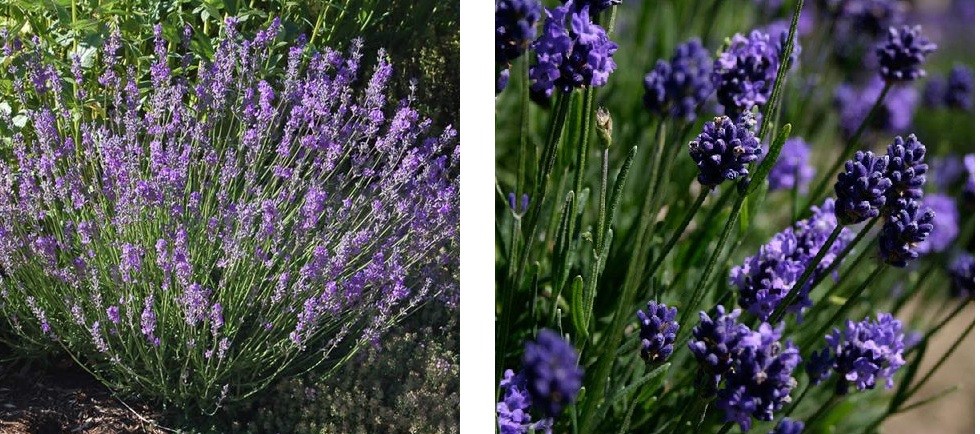
Fig. 1 The photo of Lavandula angustifolia Fig. 2 The photo of lavender flowers
Lavender Health Benefits
What Are Lavender Side Effects?
No health hazards or side effects are known in conjunction with the proper administration of designated therapeutic dosages. (11)
1. When taken by mouth
Lavender is LIKELY SAFE for most adults in amounts commonly found in foods. When consumed orally, lavender may cause constipation, headache, and increased appetite.
2. Pregnancy and breast-feeding
There is not enough information to make sure whether lavender is safe for pregnant or breastfeeding women.
So, stay on the safe side and avoid use.
3. Surgery
Lavender might slow down the central nervous system. If you use it along with anesthesia or other medications given during and after surgery, the central nervous system might become too slow.
So, stop using lavender at least 2 weeks before a scheduled surgery. (12)
4. Diabetes
In a study, lavender extracts were injected intraperitoneally to experimental animals for 20 days, one dose per day. They observed that lavender flower extracts increased blood glucose levels.
Therefore, in long-term use of lavender, please consider its effect on the glucose level. (13)
Nutritional Information
Lavender contains essential oil, anthocyanins, phytosterols, sugars, minerals, coumaric acid, glycolic acid, valeric acid, ursolic acid, herniarin, coumarin, and tannins. (14)
Lavender Daily Dosage
To prepare lavender infusion, add 5 to 10 ml (1 to 2 tsp) of lavender herb to 150 ml of hot water, and strain after 10 minutes. You can take the above tea three times a day (each time, one cup). (11, 15)
In addition, the following doses have been studied in scientific research:
ADULTS (BY MOUTH) - Anxiety: They administered 500 mg of dried, powdered lavender flowers twice a day for 8 weeks. (12)
Bioactive Compounds
The most useful substance isolated from lavender is the essential oil, presented from 2% to 3%. The qualitative and quantitative composition of lavender essential oil is variable and depends on genotype, growing location, climatic conditions, propagation, and morphological features. (2)
Best Time to Consume
1-2 hours before or after meals.
Possible Drug Interactions
1. Chloral Hydrate
Chloral hydrate causes sleepiness and drowsiness. It seems that Lavender can increase the effects of chloral hydrate. So, taking lavender along with chloral hydrate might cause too much sleepiness.
2. Sedative medications (Barbiturates)
Lavender might cause sleepiness and drowsiness. Taking lavender along with sedatives (medications that cause sleepiness) might increase their side effects and cause too much sleepiness.
Some sedative medications include amobarbital (Amytal), butabarbital (Butisol), mephobarbital (Mebaral), pentobarbital (Nembutal), phenobarbital (Luminal), secobarbital (Seconal), and so on.
3. Sedative medications (CNS depressants)
Lavender might cause sleepiness and drowsiness. Taking lavender along with sedative medications might cause too much sleepiness.
Some sedative medications include clonazepam (Klonopin), lorazepam (Ativan), phenobarbital (Donnatal), zolpidem (Ambien), and others. (12)
Use lavender along with CNS depressants and anticonvulsants with caution because it may result in synergistic narcotic and sedative effects. (16)
4. Anticoagulants
Taking anticoagulants along with lavender may increase the risk of bleeding. (15)
Caution is also advised in regard to coumarin, a lavender constituent, theoretically causing bleeding in combination with anticoagulant therapy. (16)
5. Medications used for lowering cholesterol
Taking lavender along with other drugs that lower cholesterol may significantly increase cholesterol-lowering effects.
Some of these drugs are statins, nicotinic acid, fibric acid derivatives. (15)
In animal studies, they have observed that 1,8-Cineole lowers cholesterol, which may indicate additive effects with cholesterol-reducing agents. (16)
6. Medications for high blood pressure (Antihypertensive drugs)
Lavender might decrease blood pressure in some people. So, it may interact with medications used for lowering high blood pressure and cause your blood pressure to go too low.
Therefore, do not take too much lavender if you are taking medications for high blood pressure.
Some medications for high blood pressure include captopril (Capoten), enalapril (Vasotec), losartan (Cozaar), valsartan (Diovan), diltiazem (Cardizem), Amlodipine (Norvasc), hydrochlorothiazide (HydroDIURIL), furosemide (Lasix), and many others. (17)
Traditional Use
Lavender is traditionally used orally as an infusion or decoction for relief of a variety of conditions. (15)
Some medieval physicians such as Ibn-e-Sina and Razi have prescribed lavender for treatment of epilepsy and migraine attacks. (3)
Uses of English lavender in folk medicine include treating migraine, cramps, and bronchial asthma. (15)
Iran traditional medicine has reported several properties for lavender, including being carminative, diuretic, anti-epileptic, anti-rheumatic, pain reliever especially in nervous headache and migraine. (18)
Some Questions about Lavender
References
1- https://journals.sagepub.com/
2- https://www.researchgate.net/
3- https://www.ncbi.nlm.nih.gov/
5- https://academicjournals.org/
6- https://www.jstage.jst.go.jp/
7- https://journals.sagepub.com/
8- https://www.ncbi.nlm.nih.gov/
10- https://www.ncbi.nlm.nih.gov/
11- PDR for herbal medicines (2000). 2nd ed. Montvale, NJ: Medical Economics Company
13- https://europe.endocrineconferences.com/
14- https://www.researchgate.net/
16- https://www.researchgate.net/
18- https://www.ncbi.nlm.nih.gov/
19- https://www.alaskasleep.com/
20- https://naturalingredient.org/
21- https://www.healthline.com/
23- https://naturalingredient.org/
24- https://www.researchgate.net/
25- https://www.endocrine.org/
26- https://www.medpagetoday.com/