Vitex
Discover the natural plants and herbs used in our products
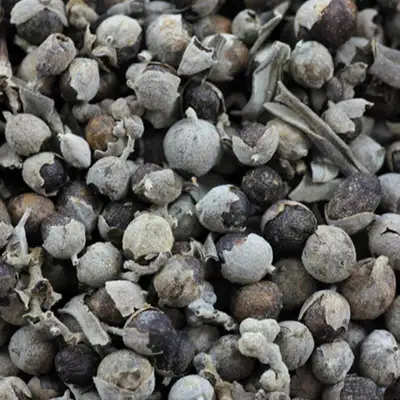
Vitex
Vitex or chaste tree or chasteberry (Vitex agnus‑castus) belongs to the family Verbenaceae, and according to the last studies, to the Lamiaceae family.
Benefits & Properties
Common Name: Vitex, Chaste Tree, Monk’s Pepper
Scientific Name: Vitex Agnus‑Castus L.
History and Origin
Vitex or chaste tree or chasteberry (Vitex agnus‑castus) belongs to the family Verbenaceae, (1) and according to the last studies, to the Lamiaceae family. (2)
This plant is native to the arid and semi-arid Mediterranean regions and is widely cultivated in the warm temperate regions and subtropics. It generally grows in humid habitats like stream banks and valleys, littoral habitats, mostly on sandy soils, parched alluvial soils, and rocky areas near the sea, sometimes on limestone slopes, in sunny and hot places, and in ditches.
There are more than 250 species of Vitex genus in the world. They grow across the Mediterranean area, Southern Europe, West Asia, Crimea, Caucasia, Iran, North Africa, Central Asia to India, and in sheltered positions in the American State of New York. (3)
Vitex Plant Structure
Vitex is a large shrub or a small deciduous tree with a height of up to 1.5 -2 m. (1)
The bark is white-felted. The opposite aromatic leaves are palmately compound with five to seven (4) finger-like leaflets. (1) Their color is gray-green, and the underside is lighter.
The fragrant flowers are in clusters, violet to blue to deep purple. (1) The fruits are small, gray-brown, hard (4), globular to oblong (5), and carry four seeds similar to black pepper. (1)
Its ripe dried fruit and dried leaves have medicinal properties. (5)
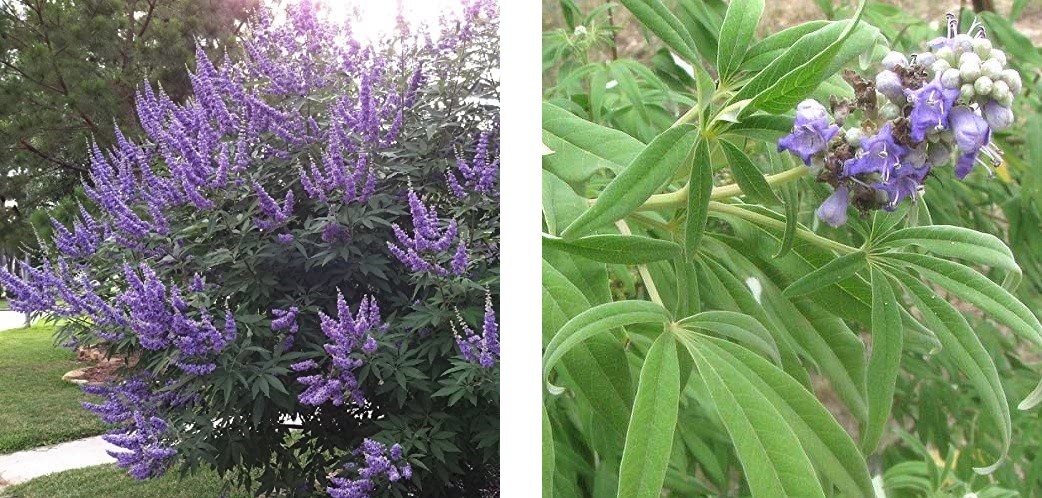
Fig. 1 The photo of Vitex agnus‑castus Fig. 2 The photo of vitex flowers and leaves
Vitex Health Benefits
What Are Vitex Side Effects?
1. When Taken by Mouth
Vitex agnus-castus fruit extract is LIKELY SAFE for most people when taken appropriately for up to 3 months.
Some uncommon side effects are upset stomach, nausea, headaches, acne, trouble sleeping, weight gain, (21) dizziness, tiredness, and dry mouth. (22) Furthermore, Some women notice a change in menstrual flow when they start taking vitex agnus-castus.
2. Pregnancy and Breast-Feeding
Consuming vitex agnus-castus is during pregnancy or breast-feeding is POSSIBLY UNSAFE. The concern is that it can interfere with hormones. So, stay on the safe side and don't use it if you are pregnant or breast-feeding.
3. Hormone-Sensitive Conditions such as Endometriosis, Uterine Fibroids, Breast Cancer, Uterus Cancer, or Ovarian Cancer
Vitex agnus-castus can have an effect on hormones and might affect estrogen levels. So, avoid using it if you have a hormone-sensitive condition. (21)
Generally, concurrent use of chasteberry with hormone replacement therapy (HRT) is NOT recommended. (23)
4. In Vitro Fertilization (IVF)
Vitex agnus-castus can interfere with the effectiveness of in vitro fertilization. So, avoid using it if you are going through IVF treatment.
5. Parkinson's Disease
Some chemicals within vitex agnus-castus and some medications used for Parkinson's disease can affect the brain similarly. Therefore, vitex agnus-castus might affect therapy for Parkinson's disease.
6. Schizophrenia or Other Psychotic Disorders
Vitex agnus-castus seems to affect dopamine, a chemical in the brain decreased by some medications for mental disorders. Consequently, taking vitex agnus-castus might affect therapy for certain mental disorders. (21)
7. Useful for Irregular Periods, but Caution Needed If You Have Polycystic Ovary Syndrome (PCOS)
Although vitex stimulates ovulation and can bring on a period within two to three months, it does not work for everyone.
If you have PCOS, vitex can make periods less regular by increasing luteinizing hormone (LH) levels; this hormone is already too high in most types of PCOS. It only works for the androgen excess caused by high prolactin. (24)
8. Allergy
If you have an allergy (or hypersensitivity) to any member of the Verbenaceae family or to any chasteberry component, avoid taking it.
Some mild skin reactions have been reported in clinical trials, including eczema, itching, rash, skin eruptions, urticaria (hives), and allergic exanthema (a skin rash accompanied by fever).
Generally, every person can have an allergy to certain herbs and spices. This sensitivity must be first diagnosed by the person and secondarily by the physician. However, these allergic reactions do not cause chronic or acute side effects; after identifying the allergenic plant and eliminating it from their diet, allergy-related complications will be gone away.
No company or product can be aware of the allergic reactions of different bodies in advance. The body's incompatibility with one or more specific herbs rarely occurs, but some consumers may encounter it anyway.
Nutritional Information
The nutrient composition of vitex agnus-castus includes protein, fiber, lipid, ash, carbohydrate, and moisture. (25)
Vitex Daily Dosage
Bioactive Compounds
According to a research, vitex fruit contains phytoestrogenic compounds. (25) (Phytoestrogens are plant-derived compounds and have estrogenic and anti-estrogenic properties.)
Moreover, chaste berry contains a number of active constituents including flavonoids (casticin, kaempferol, orientin, quercetagetin, and isovitexin), iridoid glycosides (agnuside and aucubin), and essential oils (limonene, cineol, pinene, and sabinene). (22)
Best Time to Consume
1 -2 hours before or after meals.
- To lower Prolactin
First thing in the morning before breakfast
- To promote ovulation
Do take it in your follicular phase. Vitex works best when taken before ovulation and then continued until the first day of the period. Take a five-day break every month to prevent attenuation of the herb’s effect on the pituitary.
If you have regular periods: take a five-day break from the first day of your period.
If you don’t have regular periods: use it for 25 days. Then, take five days off. Then, 25 days on again.
- Don’t take vitex immediately (too soon) after stopping the birth control pill
When you first stop taking the pill, your ovaries and pituitary need some time to start to communicate with each other after years. Your body needs a gentle, slow start to that ovulation-communication. So, you are highly recommended not to confuse things with a strong pituitary herb. (24)
Possible Drug Interactions
1. Birth control pills (Contraceptive drugs)
Birth control pills contain hormones. On the other hand, vitex agnus-castus seems to change hormone levels in the body. Therefore, taking it along with birth control pills might decrease the effectiveness of the pills.
If you are taking birth control pills along with vitex agnus-castus, use an additional form of birth control too.
Some birth control pills are Triphasil (ethinyl estradiol and levonorgestrel), Ethinyl estradiol and norethindrone. (21)
2. Estrogens or estrogen antagonists
Chasteberry contains estrogenic compounds. So, it may result in additive or opposing effects with estrogens or estrogen antagonists (e.g. tamoxifen). (23)
Some estrogen pills are conjugated estrogens (Premarin), Ethinylestradiol, and Estradiol.
3. Medications for mental conditions (Antipsychotic drugs)
Vitex agnus-castus seems to affect dopamine, a chemical in the brain decreased by medications for mental disorders. Taking vitex agnus-castus along with medications for mental conditions might decrease the effectiveness of some of these medications.
Some medications for mental conditions are chlorpromazine (Thorazine), clozapine (Clozaril), fluphenazine (Prolixin), haloperidol (Haldol), olanzapine (Zyprexa), perphenazine (Trilafon), prochlorperazine (Compazine), quetiapine (Seroquel), risperidone (Risperdal), thioridazine (Mellaril), and thiothixene (Navane).
4. Medications used for Parkinson's disease (Dopamine agonists)
Some chemicals within vitex agnus-castus and some medications used for Parkinson's disease can affect the brain similarly. So, Taking vitex agnus-castus with medications used for Parkinson's disease might increase the effects and side effects of some of these medications.
Some medications used for Parkinson's disease are bromocriptine (Parlodel), levodopa (Dopar, a component of Sinemet), pramipexole (Mirapex), and ropinirole (Requip).
5. Metoclopramide (Reglan)
Vitex agnus-castus and Metoclopramide (Reglan) both affect a certain brain chemical called dopamine. Therefore, taking vitex agnus-castus along with Metoclopramide might decrease its effectiveness. (21)
Traditional Use
For more than 2500 years, the fruits have been used in ancient Egypt, Greece, Iran, and Rome for treating a variety of gynecologic problems. (1)
Over the past 50 years, Europeans have widely used chasteberry for treating some gynecologic conditions such as premenstrual syndrome (PMS), cyclical breast discomfort, menstrual cycle irregularities, and dysfunctional uterine bleeding. (22)
The fruits have been traditionally used to treat flatulence, diarrhea, menopause, acne, infertility, premenstrual dysphoric disorder, and other menstrual disorders (amenorrhea, dysmenorrhea). (2)
Some other uses are suppressing appetite, inducing sleep, treating prostatitis, treating swollen testicles or ovaries, and relieving uterine pain. (5)
Some Questions about Vitex
References
3- https://www.researchgate.net/
4- https://www.researchgate.net/
5- PDR for herbal medicines. (2000). 2nd ed. Montvale, NJ: Medical Economics Company
6- https://www.researchgate.net/
7- https://www.ncbi.nlm.nih.gov/
10- https://jeb.biologists.org/
11- https://www.researchgate.net/
12- https://www.tandfonline.com/
13- http://journal.qums.ac.ir/
14- https://www.smr.jsexmed.org/
16- https://www.sciencedirect.com/
17- https://wholehealthchicago.com/
18- http://armaghanj.yums.ac.ir/
19- https://www.ncbi.nlm.nih.gov/
20- https://www.researchgate.net/
24- https://www.larabriden.com/
26- https://healthyeating.sfgate.com/
27- https://www.healthline.com/
29- https://www.medicalnewstoday.com/
30- https://sites.kowsarpub.com/
31- https://www.medicalnewstoday.com/
32- https://www.thieme-connect.com/