Quinoa
Discover the natural plants and herbs used in our products
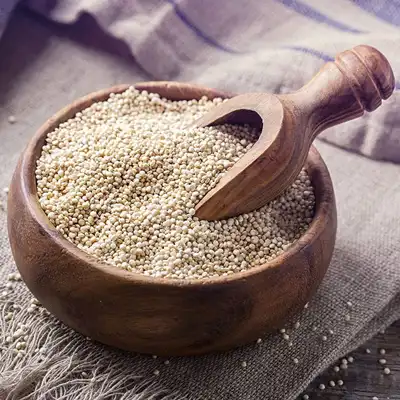
Quinoa
Quinoa has many different native names. The Incas, American Indian people, called it “the mother grain” and used it to treat many health problems.
Benefits & Properties
Common Name: Quinoa
Scientific Name: Chenopodium quinoa Willd.
History and Origin
Quinoa, an ancient crop in the American continent, (1) has been cultivated for thousands of years in the Andean region of Bolivia and Peru. (2) According to some historical archeological documentation, the use of quinoa dates back to before 3000 BC.
Quinoa has many different native names. The Incas, American Indian people, called it “the mother grain” and used it to treat many health problems. (1)
Quinoa Plant Structure
Quinoa belongs to the family Amaranthaceae (3) or Chenopodiaceae. It is an annual broad-leaved plant, 1–2 m tall with deep penetrating roots and can be cultivated from sea level up to an altitude of 3800 m. It is not a true-grain and is considered as a fruit because it is a dicotyledon which is pseudo-grain. (1)
Quinoa is distributed worldwide and includes 250 varieties. Its classification is based on the color of the plant and fruits, or on plant morphology. (2) It has an erect stem, and bears alternate leaves that are variously colored due to the presence of betacyanins. Quinoa is a gynomonoecious species, containing both hermaphrodite and female flowers on the same plant. (5) The seeds are round and flat, about 1.5-4 mm in diameter and their color varies from white to grey and black, with tones of yellow, rose, red, purple, and violet. (2) The plant shows tolerance to frost, salinity, and drought, and has the ability to grow on marginal soils. Quinoa can grow easily in acid or alkaline conditions. (1)
The plant exhibits an enormous adaptability to different environments. Therefore, the production has spread through many different countries, including Japan, Australia, Spain, Germany, England, Sweden, Denmark, the Netherlands, Italy, France, Finland, Kenya, Ethiopia, India, the USA, Canada, etc. (6)
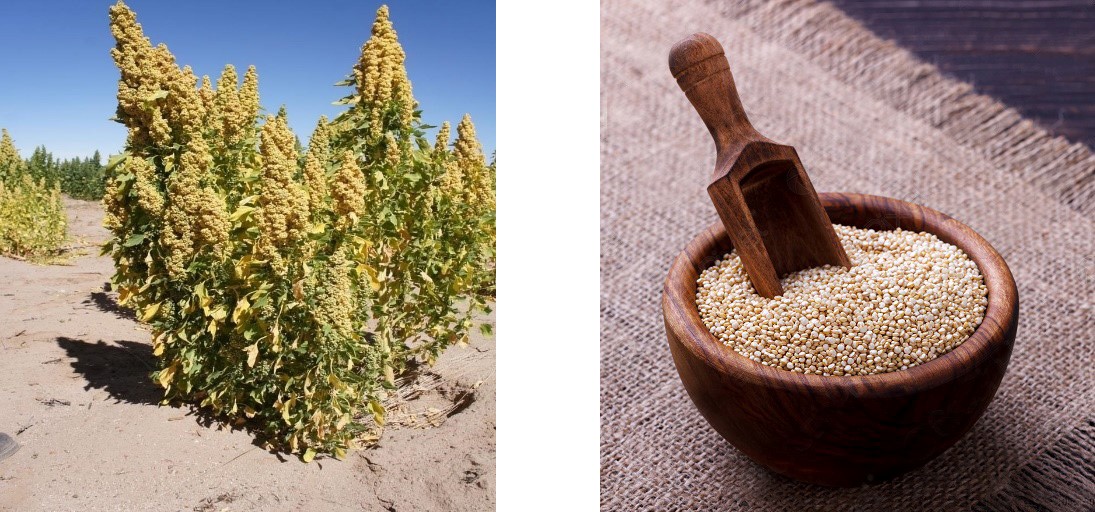
Fig. 1 The photo of quinoa plant Fig. 2 The photo of quinoa seeds
Quinoa Health Benefits
What Are Quinoa Side Effects?
1. When Taken by Mouth
Quinoa is LIKELY SAFE when taken as food. There isn't enough reliable information about the safety of large amounts of quinoa as a medicine or the potential side effects. Some people are allergic to quinoa.
2. Pregnancy and Breast-Feeding
There isn't enough reliable information about the safety of quinoa during pregnancy or while breast-feeding. So, stay on the safe side and avoid consuming amounts higher than those found in food.
3. Allergy to Other Foods Used as Grains
Individuals who are sensitive to foods used as grains such as buckwheat, wheat, and rice may be allergic to quinoa too. So, if you have allergies to grains, consult with your healthcare provider before using quinoa. (30)
4. Cross-Reactive Foods
Quinoa, spinach, beets, and Swiss chard belong to the same family. Therefore, since they’re related, you may experience similar allergic reactions to quinoa as you would with a chard allergy.
5. Saponin Allergy
Saponin, a bitter and soapy substance, protects the quinoa plant from fungal and insect attacks. It also contains some toxins which can cause irritation, etc. in some people. Although the level of toxicity is low, you may be sensitive to this compound.
Some people have reported that after eating quinoa for a while, they have experienced intolerance or allergy to it. This is often caused by saponin. (31)
Saponin is removed by soaking or roasting quinoa seeds before cooking. If not removed, it can cause an upset stomach and can even hurt the function of the small intestine. (32)
If you have intolerance or allergy to saponin only, you can still include quinoa in your diet on the condition that you wash the seeds well. This will help remove the natural coating which contains saponin. (31)
6. Prolamins (Gluten-Free but Beware)
Quinoa is gluten-free. Therefore, it is a good option for those suffering from celiac disease, wheat allergy, or gluten sensitivity. Some types of quinoa contain prolamins, a substance that can provoke an immune response in people with celiac disease. However, most types of quinoa do not contain prolamins, and we need more studies to verify the effect of this substance.
Moreover, a study showed that quinoa was well-tolerated by celiac patients as a part of their gluten-free diet.
7. Oxalate Warning
Many plant-based foods, including quinoa, naturally contain different amounts of a substance called oxalate or oxalic acid. Although nearly all of the oxalic acid you consume is excreted in the urine, it can bind with calcium and may form kidney stones in people who are susceptible to calcium oxalate stones.
If you have ever suffered from kidney stones, consuming foods high in oxalic acid like quinoa may enhance the risk of developing more stones in the future. So, if you follow a low-oxalate diet, talk with your healthcare provider before eating quinoa.
8. High-Fiber Side Effects
One cup of cooked quinoa contains 5 grams of fiber. This amount is high enough to cause side effects if you're not used to eating a lot of fiber. If you experience gas, diarrhea, or bloating after eating quinoa, it may be caused by fiber. You are recommended to start with smaller portions and add fiber to your diet gradually. As you increase your fiber intake, make sure to drink enough water or non-caffeinated beverages. (33)
Generally, every person can have an allergy to certain herbs and spices. This sensitivity must be first diagnosed by the person and secondarily by the physician. However, these allergic reactions do not cause chronic or acute side effects; after identifying the allergenic plant and eliminating it from their diet, allergy-related complications will be gone away.
No company or product can be aware of the allergic reactions of different bodies in advance. The body's incompatibility with one or more specific herbs rarely occurs, but some consumers may encounter it anyway.
Nutritional Information
Quinoa grain is highly nutritious because of its outstanding protein quality and wide range of minerals and vitamins. Two factors may affect its yield and nutritional quality: Genetic and environmental conditions.
Protein and Amino Acid Content: The protein content of quinoa seeds varies between 11% and 19%. The seeds also contain all nine essential amino acids (i.e. Isoleucine, leucine, lysine, methionine, phenylalanine, threonine, tryptophan, valine, and Histidine). (34) The grain protein is rich in amino acids like lysine and methionine that are deficient in cereals.
Carbohydrates: The carbohydrate content of quinoa seeds varies between 49% and 68% (dry matter weight). Starch is the main and the most abundant carbohydrate present in quinoa seeds. Another carbohydrate is dietary fiber (34) (soluble and insoluble fiber). (35)
Fat: The fat content of quinoa seeds ranges between 2% and 9.5%. Quinoa oil is rich in essential fatty acids such as linoleic (49.0%–56.4%), oleic (19.7%–29.5%), and linolenic (8.7%–11.7%). 87%-88% of total fatty acids of the seeds are (poly-) unsaturated fatty acid. (34)
Moreover, oil content in quinoa contains high concentrations of natural antioxidants such as α- and γ-tocopherol. (3)
Minerals: Quinoa has higher total mineral (ash) content than durum wheat, white rice, yellow corn grain, and other cereals. (36) The ash content of quinoa seeds varies between 2.4% and 4.8% and is a good source of minerals, including a high content of calcium, magnesium, iron, copper, and zinc. (34)
Phytosterols: The total phytosterols content reported in quinoa varies from 38.8 to 82.5 mg/100 g. The main components include β-sitosterol, campesterol, brassicasterol, and stigmasterol. (36)
Phenolic compounds: The total polyphenol content determined in quinoa seeds is between 0.46 and 1.84 mg/g dry weight. Flavonol glycosides represent the most abundant phenolics in this plant. Quinoa seeds contain flavonoids (mainly orientin, vitexin, and rutin, morin, hesperidin, and neohesperidin) and phenolic acids (such as ferulic, caffeic, and p-coumaric acids). (36)
Vitamins: Quinoa is packed with vitamins, namely Cobalamin (B12) (36), riboflavin (B2), folic acid (B9), and thiamine (B1), but is a lesser source of niacin (B3). (34) It also contains vitamins E, C (3), and D3. (36)
Bioactive Compounds
Bioactive compounds in quinoa include saponins, phytosterols, phytoecdysteroids, phenolic compounds, polysaccharides, betalains, bioactive proteins, and peptides. (36)
Possible Drug Interactions
We currently have no information for quinoa interactions. (30)
Traditional Use
Some indigenous peoples of South America have been traditionally using quinoa. They consume the seeds like rice, prepare them in soup, puff them to make breakfast cereal, or grind them into flour to produce toasted and baked goods (cookies, bread, biscuits, noodles, flakes, tortillas, and pancakes) (37)
Some Questions about Quinoa
References
1- https://www.researchgate.net/
2- https://www.researchgate.net/
3- https://nutraceuticals.imedpub.com/
5- https://www.researchgate.net/
6- https://www.researchgate.net/
7- https://www.researchgate.net/
8- https://www.sciencedirect.com/
9- https://pubmed.ncbi.nlm.nih.gov/
10- https://labtestsonline.org/
11- https://www.ncbi.nlm.nih.gov/
13- https://www.healthline.com/
14- https://pubmed.ncbi.nlm.nih.gov/
15- https://www.researchgate.net/
17- https://www.ncbi.nlm.nih.gov/
18- https://pubmed.ncbi.nlm.nih.gov/
20- https://www.researchgate.net/
22- https://joe.bioscientifica.com/
24- https://www.researchgate.net/
25- https://www.researchgate.net/
26- https://www.ncbi.nlm.nih.gov/
27- https://www.researchgate.net/
28- https://www.jstage.jst.go.jp/
29- http://www.worldscientificnews.com/
31- https://www.healthline.com/
32- https://www.medicaldaily.com/
33- https://www.livestrong.com/
34- https://www.ncbi.nlm.nih.gov/
35- https://www.researchgate.net/
37- https://onlinelibrary.wiley.com/
38- https://www.cheatsheet.com/
39- https://www.careergirldaily.com/
40- https://www.healthline.com/
41- https://www.hungry-girl.com/
43- https://timesofindia.indiatimes.com/
44- https://www.healthline.com/
45- https://www.healthline.com/
46- https://www.vegancoach.com/