Yarrow
Discover the natural plants and herbs used in our products
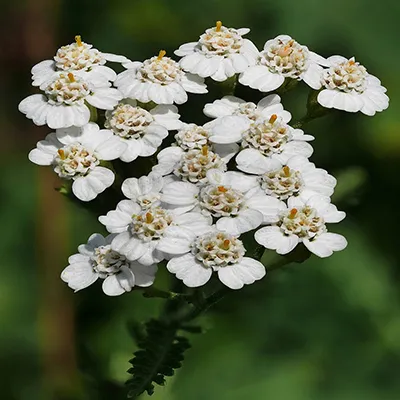
Yarrow
Yarrow infusion is widely used in Europe as a remedy to treat digestive problems, diabetes, hepato-biliary diseases, and amenorrhea.
Benefits & Properties
Common Name: Yarrow, Common Yarrow, Milfoil
Scientific Name: Achillea millefolium L.
History and Origin
Yarrow is a flowering herbaceous perennial plant that belongs to the family Asteraceae. (1) Yarrow is one of the oldest known medicinal plants used by humans. The oldest surviving texts to record the use of yarrow in traditional European medicine are by Pliny the Elder and Dioscorides, both during the first century C.E. (2)
The word “Achillea” refers to the Greek hero Achilles, who is believed to have carried the plant to treat soldiers' wounds, and the word millefolium, which means “thousand-leaf”, refers to the multipinnate leaves. (3) It can be found in northern Asia, North America, Europe and southern Australia. (1) Full sun is ideal for yarrow growth and blooming. (1, 4) Yarrow is commonly found in meadows, along roadsides, and on dry, sunny slopes. (1)
Yarrow Plant Structure
Yarrow has one or more erect stems (0.2 to 1m tall). Leaves are evenly distributed along the stem. The largest leaves are found near the middle and bottom of the stem. The leaves are bipinnate or tripinnate, almost feathery, 5–20 cm long, and arranged spirally on the stems. They are hairy to varying degrees. (1)
The flowers of millefolium species typically are whitish to yellowish-white, (5) but either pink or pale purple flowers are common in mountain areas. (1) White, five-petaled flowers have yellow stamens and are clustered together in an umbellate-shape on a long straight stalk. (6) The volatile oil glands are present on the stem, leaves and petals. (3) The whole plant is aromatic and smells similar to chamomile and pine. (6) The yarrow plant is collected during bloom when 80% of the flowers are open. (4) The flowers, leaves, and stems of the Yarrow plant are used medicinally. (1)
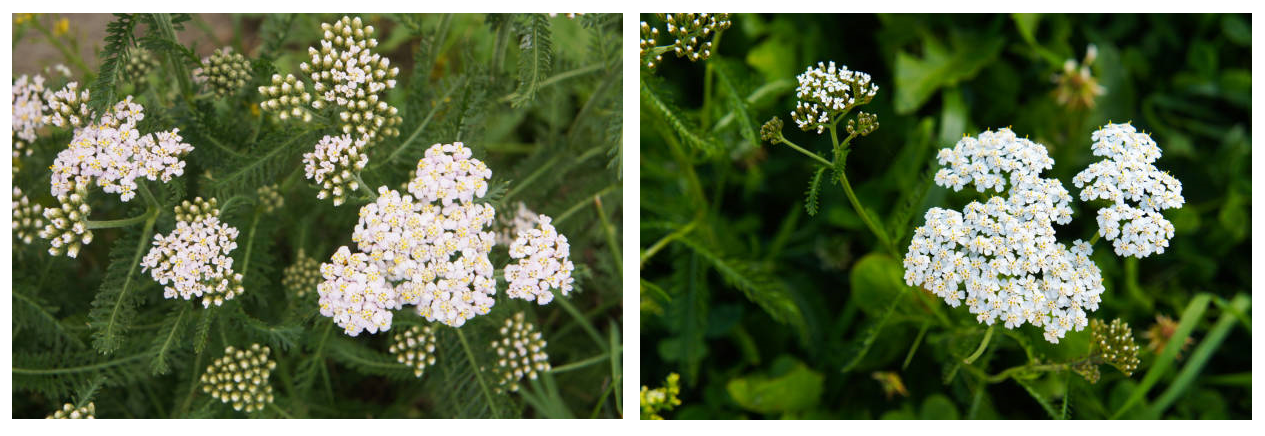 The photo of Achillea millefolium
Yarrow Health Benefits
What Are Yarrow Side Effects?
1. When taken by mouth: Yarrow is LIKELY SAFE for most people when taken in amounts commonly found in food. Yarrow is POSSIBLY SAFE when taken by mouth in the amounts found in medicine. (25)
* However, yarrow products containing a chemical called thujone may be UNSAFE. (25) If a thujone content of up to 5% in the volatile oil is taken as a worst-case scenario from the scientific literature data, the amount of thujone in the maximum daily dose of the herbal preparations is theoretically calculated to not exceed 1.5 mg of thujone.” (26)
2. Pregnancy and breast-feeding: Yarrow is LIKELY UNSAFE to take orally during pregnancy because it can affect the menstrual cycle and might cause miscarriage. There isn't enough reliable information to know if yarrow is safe to use when breast-feeding. Stay on the safe side and avoid using yarrow. (25)
3. Children: Its use in children under 12 years of age is not recommended. (26)
4. When applied to the skin: There isn't enough reliable information to know if yarrow is safe or what the side effects might be. When yarrow comes into contact with the skin, it might cause irritation in some people. (25) In addition, long-term use of yarrow may make your skin more sensitive to sunlight. (27, 28)
5. Bleeding disorder: It is observed that hot water infusion of flowering herb has a high haemostyptic activity (an astringent that stops bleeding), whereas pressed juice can prolong blood coagulation. (26) In other words, when used in moderation, this herb can stimulate blood clotting, however, in excess, it can act as a blood-thinner in the body. (29) Therefore, yarrow might slow blood clotting. In theory, taking yarrow might increase the risk of bleeding in people with bleeding disorders. (25)
6. Hormone-sensitive conditions such as breast cancer, uterine cancer, ovarian cancer, endometriosis, or uterine fibroids: According to one study, a crude extract of yarrow aerial parts has shown estrogenic activity. If you have any condition that might be made worse by exposure to estrogen, avoid using yarrow. (16)
7. Allergy to ragweed and related plants: Yarrow may cause an allergic reaction in people who are sensitive to the Asteraceae/Compositae family. Members of this family include ragweed, chrysanthemums, marigolds, daisies, and many others. If you have allergies, consult with your doctor before taking yarrow. (25) The main compound responsible for the sensitization is a sesquiterpene lactone, alpha-peroxyachfolid. (30)
8. Surgery: Because yarrow might slow blood clotting, there is a concern that it might increase bleeding during and after surgery. Stop taking yarrow at least 2 weeks before a scheduled surgery. (25)
Generally, every person may be allergic to certain herbs and spices. This sensitivity must be first diagnosed by the person and secondarily by the physician. However, these allergic reactions do not cause chronic or acute side effects, and after identifying the allergenic plant and removing it from the diet, allergy-related complications will be eliminated. No company or product can be aware of the allergic reactions of different bodies in advance. The body's incompatibility with one or more specific herbs rarely occurs, but consumers may encounter it anyway.
Nutritional Information
According to a study, dried inflorescences and upper leaves of yarrow, as well as their infusion, contain minerals (Ca, Mg, K, Fe, Cu, Mn, Zn) and Vitamin B9 (folic acid/folates). (31)
Yarrow Daily Dosage
To make a herbal tea, use 2 gm of finely cut herb. A cup of this herbal tea is drunk 3 to 4 times daily. It is best to make fresh tea for each use. (30)
* High doses of yarrow may turn urine dark brown. (28)
Bioactive Compounds
According to the literature, the pharmacological effects are attributed primarily to the volatile oil, proazulenes and other sesquiterpene lactones, and phenolic compounds such as dicaffeoylquinic acids and flavonoids. However, these components can be found in very different quantities in various plant materials.
The main active compounds of yarrow include Flavonoids (apigenin, luteolin, isorhamnetin, rutin); phenolic acids (caffeic, salicylic acids); tannins; amino acids (alanine, histidine, leucine, lysine); fatty acids (linoleic, palmitic, oleic acids); vitamins (ascorbic acid, folic acid); alkaloids and bases (achiceine, achilleine, betaine, choline); alkanes (tricosane); polyacetylenes; saponins; phytosterols (β-sitosterol); sugars (dextrose, glucose, mannitol, sucrose); and coumarins.
The herb also contain volatile oils (essential oil), mostly β-caryophyllene, linalool, camphor, borneol, 1,8-cineole, and sesquiterpene lactones composed of guaianolides, mainly achillicin (a proazulene), achillin, leucodin, and germacranolides (achillifolin, dihydroparthenolide, millefin). The volatile oil content and its chemical composition may vary depending on the source of the plant material and the number of chromosomes present in the plant. (26) According to the European Pharmacopoeia, dried flowering tops of Achillea millefolium L. should contain “not less than 2 ml/kg of volatile oil (essential oil) and not less than 0.02% chamazulene (proazulenes). (32)
According to a 2006 study, the volatile oil of A. millefolium may contain α-thujone and β-thujone, with mean values of 2.26% and 1.61%, respectively. Nevertheless, the published evidence confirms that thujone is a minor component of the volatile oil of A. millefolium; its concentration is considered too low to present a risk to human health. (26)
Best Time to Consume
Between meals.
Possible Drug Interactions
Medications that slow blood clotting (Anticoagulant / Antiplatelet drugs): Yarrow might slow blood clotting. Taking yarrow along with medications that also slow clotting might increase the chances of bruising and bleeding. Some medications that slow blood clotting include aspirin, clopidogrel (Plavix), diclofenac (Voltaren, Cataflam, others), ibuprofen (Advil, Motrin, others), naproxen (Anaprox, Naprosyn, others), dalteparin (Fragmin), enoxaparin (Lovenox), heparin, warfarin (Coumadin), and others.
Lithium: Yarrow might have an effect like a water pill or "diuretic." Taking yarrow might decrease how well the body gets rid of lithium. This could increase how much lithium is in the body and result in serious side effects. Talk with your healthcare provider before using this product if you are taking lithium. Your lithium dose might need to be changed. (25)
Medications for high blood pressure (Antihypertensive drugs): Yarrow may lower blood pressure and could strengthen the effects of prescription drugs taken to lower blood pressure. Some medications for high blood pressure include captopril (Capoten), enalapril (Vasotec), losartan (Cozaar), valsartan (Diovan), diltiazem (Cardizem), Amlodipine (Norvasc), hydrochlorothiazide (HydroDIURIL), furosemide (Lasix), and many others. (27)
Medications that decrease stomach acid: Yarrow might increase stomach acid. By increasing stomach acid, yarrow might decrease the effectiveness of some medications that decrease stomach acid. Some medications that decrease stomach acid include:
1. (H2-Blockers): such as cimetidine (Tagamet), ranitidine (Zantac), nizatidine (Axid), and famotidine (Pepcid).
2. Antacids: such as calcium carbonate (Tums, others), dihydroxyaluminum sodium carbonate (Rolaids, others), magaldrate (Riopan), magnesium sulfate (Bilagog), aluminum hydroxide (Amphojel), and others.
3. Proton pump inhibitors: such as omeprazole (Prilosec), lansoprazole (Prevacid), rabeprazole (Aciphex), pantoprazole (Protonix), and esomeprazole (Nexium). (25)
Drugs that cause sleepiness: Because yarrow is a mild sedative, it can increase the effects of other drugs you take for anxiety or insomnia. These include:
1. Anticonvulsants: Some medications used to prevent seizures include phenobarbital, primidone (Mysoline), valproic acid (Depakene), gabapentin (Neurontin), carbamazepine (Tegretol), phenytoin (Dilantin), and others.
2. Barbiturates: Some sedative medications (barbiturates) include amobarbital (Amytal), butabarbital (Butisol), mephobarbital (Mebaral), pentobarbital (Nembutal), phenobarbital (Luminal), secobarbital (Seconal), and others.
3. Benzodiazepines: Some benzodiazepines include alprazolam (Xanax), clonazepam (Klonopin), diazepam (Valium), lorazepam (Ativan), midazolam (Versed), temazepam (Restoril), triazolam (Halcion), and others.
4. Drugs for insomnia, such as zolpidem (Ambien), zaleplon (Sonata), eszopiclone (Lunesta), ramelteon (Rozerem). (27)
Traditional Use
Yarrow infusion is widely used in Europe as a remedy to treat digestive problems, diabetes, hepato-biliary diseases and amenorrhea. It is also used for its antitumor, antimicrobial, anti-inflammatory and antioxidant properties, among others. The decoction is used to treat digestive and intestinal disorders, as well as skin and mucosa inflammations. (33) Yarrow also is listed in the Indian Ayurvedic Pharmacopoeia for fevers and wound healing. (26)
The European Union Herbal Monograph on Millefolii herba accepted the following traditional uses:
- For the treatment of temporary loss of appetite and mild, spasmodic gastrointestinal complaints, including bloating, and flatulence. For this purpose, 1.5-4 g of the comminuted herbal substance in 150-250 ml boiling water is used orally as a herbal infusion 3 or 4 times a day between meals. The duration of use is 2 weeks. If the symptoms persist for more than 2 weeks during the use of the herbal infusion, a doctor should be consulted.
- For the treatment of minor spasms associated with menstrual periods. For this purpose, 1-2 g of the comminuted herbal substance in 250 ml boiling water is used orally as a herbal infusion 2-3 times daily. The duration of use is 1 week. If the symptoms persist for more than 1 week during the use of the herbal infusion, a doctor should be consulted.
- For the treatment of small superficial wounds. For this purpose, 3-4 g of the comminuted herbal substance in 250 ml water is applied to the affected area in a form of impregnated dressing 2-3 times daily. The duration of cutaneous use is 1 week. If the symptoms persist for more than 1 week during the use of the herbal infusion, a doctor should be consulted. (26)
Some Questions about Yarrow
References
1. https://www.researchgate.net/publication/285763271
2. https://www.researchgate.net/publication/226940149
3. https://www.sciencedirect.com/topics/medicine-and-dentistry/achillea-millefolium
4. https://agresearch.montana.edu/warc/research_current/research_past/herbsandoils/yarrow.html
5. https://plants.usda.gov/DocumentLibrary/factsheet/pdf/fs_acmi2.pdf
6. https://assets.website-files.com
8. https://citeseerx.ist.psu.edu/
9. https://pubmed.ncbi.nlm.nih.gov/23791807/
10. https://www.thepharmajournal.com/vol2Issue3/Issue_may_2013/8.pdf
11. http://eprints.kums.ac.ir/5575
12. https://www.ncbi.nlm.nih.gov/pmc/articles/PMC7184710/
13. http://herbmedpharmacol.com/Article/jhp-6337
14. https://www.sciencedirect.com/science/article/pii/S0378874111008567
15. https://www.karger.com/Article/Pdf/485489
16. https://www.ncbi.nlm.nih.gov/pmc/articles/PMC3232110/
17. https://journal.qums.ac.ir/article-1-161-en.html
18. https://jvlr.semnan.ac.ir/article_987.html [in Persian]
19. https://ijarbs.com/pdfcopy/aug2017/ijarbs15.pdf
20. https://pdfs.nutramedix.ec/
23. https://www.sciencedirect.com/science/article/abs/pii/S0378874119344319
24. https://academicjournals.org/article/article1380379543
25. https://www.webmd.com/vitamins/ai/ingredientmono-151/yarrow
27. https://www.mountsinai.org/health-library/herb/yarrow
28. Khare CP, editor. Indian Herbal Remedies: Rational Western Therapy, Ayurvedic and Other Traditional Usage, Botany. Berlin (DE): Springer; 2004.
29. https://www.organicfacts.net/yarrow-achillea.html
30. PDR for herbal medicines. (2000). 2nd ed. Montvale, NJ: Medical Economics Company.
31. https://bibliotecadigital.ipb.pt/bitstream/10198/13331/3/306.pdf
32. https://www.ingentaconnect.com/content/govi/pharmaz/
33. https://bibliotecadigital.ipb.pt/bitstream/10198/8590/4/A.millefolium_FC_final.pdf