Purslane
Discover the natural plants and herbs used in our products
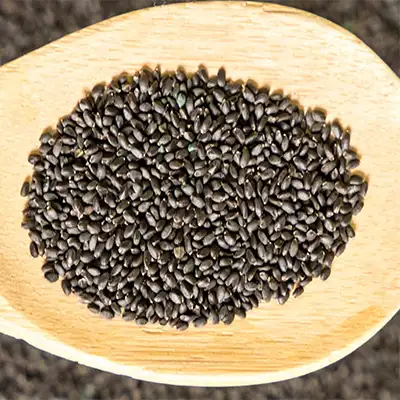
Purslane
Purslane is a major source of omega-3s, especially alpha-linolenic acid. As adjuvant treatment for type-2 diabetes, purslane seeds are safe and effective.
Benefits & Properties
Common Name: Purslane
Scientific Name: Portulaca oleracea L.
History and Origin
Purslane is an annual herbaceous plant belonging to the Portulacaceae family. The name "Portulaca" is derived from the Latin word "Laca," meaning "milk," in reference to the plant's milky juice. (1) While the origin of purslane remains unknown, reports of its existence date back approximately 4,000 years. The succulent stems and fleshy leaves of purslane suggest that it likely originated and adapted to the desert climates of India and the Middle East. (2) This plant is distributed in many parts of the world, particularly in the tropical and subtropical areas. (1) Europe, North America, Africa, Australia, and Asia are among the regions where it thrives. Purslane thrives in regions such as Europe, North America, Africa, Australia, and Asia. It grows abundantly in orchards, vineyards, crop fields, gardens, and along roadsides. (2)
Purslane Plant Structure
Purslane stems are cylindrical, reaching up to 30 cm in length and 2-3 mm in diameter. They are green or red, smooth, and glabrous, except at the leaf axils, and branched. The leaves are alternate or subopposite, flat (2), succulent (3), thick (1), and obovate, measuring 1–5 cm in length and 0.5–2 cm in width. They have an obtuse or slightly notched apex, are glabrous, smooth, and waxy on the upper surface, with entire margins. The leaves are green or green with a red margin (2), shiny, and have a sour taste. (3) Its flowers originate at the tips of stems.
The flowers are small, with five petals that can be orange, yellow, purple, or white-pink. They typically bloom only on hot, sunny days, from mid-morning to early afternoon. The fruit consists of nearly round to egg-shaped capsules, usually 4–8 mm long, which split open around the middle to release the seeds. Purslane seeds are tiny, less than 1 mm in diameter, circular to egg-shaped, flattened (2), slightly glossy, and black. (4) Each capsule contains numerous purslane seeds. (2)
Purslane Health Benefits
What Are Purslane Side Effects?
Clinical use: No negative effects have been documented in the majority of clinical investigations. Generally, Portulaca oleracea is well tolerated in the majority of patients. However, three patients reported skin rash, thyroiditis (1) (inflammation of the thyroid gland that can lead to over- and under-production of thyroid hormones that control metabolism (15)), and facial nerve palsy. Another clinical trial reported constipation as the only side effect associated with Portulaca oleracea consumption. (1)
Oxalate warning: Due to the herb's 1.7% oxalic acid content, individuals with digestive disorders, kidney stone proneness (16), or high uric acid levels should avoid consuming large amounts of it. (17)
Pregnancy: Pregnant women should not use the herb in therapeutic doses, as it may have a contracting effect on the uterus. (16)
Lactation: There is a lack of information regarding lactation safety and efficacy. (18) Stay on the safe side and avoid using amounts larger than those normally found in foods.
Anti-fertility effect: Flavonoids from this plant may have an anti-fertility effect, according to a study. Stay on the safe side and avoid using purslane seeds if you are planning a pregnancy. (1)
Generally, every person may be allergic to certain herbs and spices. This sensitivity must be first diagnosed by the person and secondarily by the physician. However, these allergic reactions do not cause chronic or acute side effects, and after identifying the allergenic plant and removing it from the diet, allergy-related complications will be eliminated. No company or product can be aware of the allergic reactions of different bodies in advance. The body's incompatibility with one or more specific herbs rarely occurs, but consumers may encounter it anyway.
Nutritional Information
• Purslane (Portulaca oleracea) has the following nutritional value per 100 g: Energy (16 kcal); carbohydrates (3.4 g); protein (1.30 g); total fat (0.1 g); vitamins including folates (12 μg), niacin (0.480 mg), pantothenic acid (0.036 mg), pyridoxine (0.073 mg), riboflavin (0.112 mg), thiamin (0.047 mg), vitamin A (1320 IU), vitamin C (21 mg); electrolytes including sodium (45 mg) and potassium (494 mg); minerals including calcium (65 mg), copper (0.113 mg), iron (1.99 mg), magnesium (68 mg), manganese (0.303 mg), phosphorus (44 mg), selenium (0.9 μg), zinc (0.17 mg). (2)
• The primary components of dried purslane seeds are fat, carbohydrates, and protein. (19)
Purslane Daily Dosage
In your diet, you typically consume 3 to 5 grams of purslane seeds per day.
The clinical studies provide the following dosage guidelines:
For obesity and fatty liver: Consume 10 grams of purslane seeds per day, 5 grams before the two meals of breakfast and dinner, for 8 weeks. (7)
For anemia: Consume 0.3 g/kg of purslane seeds daily for 4 weeks. (8)
For type 2 diabetes: Consume 5 g of powdered purslane seeds twice daily for 8 weeks.
For hyperlipidemia: Consume 500 mg of purslane seeds twice daily for 1 month. (18)
For abnormal uterine bleeding: Consume 5 g of purslane seed powder mixed in a glass of water every 4 hours orally, starting 48 hours after the onset of menstruation, for a duration of 3 days. (20)
Bioactive Compounds
Numerous constituents of Portulaca oleracea have been isolated, including:
Flavonoids;
Alkaloids;
Terpenoids;
Polysaccharides;
Vitamins: including vitamin A, ascorbic acid (vitamin C), α-tocopherol (a type of vitamin E), and B-complex vitamins, for example, niacin (B3), pyridoxine (B6), and riboflavin (B2);
Sterols;
Proteins and amino acids: for example, isoleucine, leucine, proline, phenylalanine, lysine, cystine, methionine, tyrosine, valine, and threonine; (21)
• The essential amino acid content in purslane seeds is higher than the FAO/WHO recommended content for adults.
• The essential amino acid content in purslane seeds is comparable to the FAO/WHO recommended content for preschool children.
• Glutamic acid, aspartic acid, and arginine are the primary non-essential amino acids found in purslane seeds. Notably, arginine is considered essential for children.
• The ratios of total essential amino acids (TEAA) to total amino acids (TAA) in purslane seed protein are above the level stated for ideal protein-containing food for infants, children, and adults. (19)
Minerals: like phosphorus, manganese, iron, calcium, and selenium; and
Fatty acids: (21) Portulaca oleracea is a major plant source of omega-3 fatty acids, especially alpha-linolenic acid (ALA). (1)
Best Time to Consume
You can incorporate purslane seeds into your daily diet.
Possible Drug Interactions
There is not well documented information about the drug interactions of Purslane. (18)
However, there is a possibility that purslane seeds may interact with certain medications. If you are taking any medication, it’s advisable to consult your doctor to determine whether consuming purslane seeds could interfere with your treatment.
Traditional Use
The most frequent traditional uses of purslane in various countries seem to be the treatment of headaches, inflammations, teeth problems, stomach illnesses, respiratory diseases, worms, fever, scurvy (a disease resulting from a lack of vitamin C), epistaxis (nosebleeds), wounds, and ulcers.
- Purslane leaves and seeds are widely used in cooking and confectionery in Persia. Traditional Persian Medicine (TPM) also uses it as a medicinal plant.
Purslane seeds serve as an antitussive, febrifuge, thirst remedy, digestive aid, depurative, treatment for hemorrhoids, and diuretic in Mashhad, Iran. Iran's Ilam Province uses all parts of the plant as an anti-parasite. People in Kohghiluyeh va Boyer Ahmad province of Iran consume the aerial parts of purslane, which include stems, leaves, petioles, flowers, fruits, and seeds, as a stomach tonic.
Additionally, "seed's milk," made by macerating powdered seeds in hot water and then filtering the mixture, is another popular preparation of this plant (Aqili Khorasani, 1992). The ‘seed's milk’ is used as a brain and heart refrigerant, and is also employed to treat encephalitis, thirst, headaches, meningitis, conjunctivitis, mouth ulcers, epistaxis, tonsillitis, palpitations, and pleurisy caused by excessive heart heat.
- In Spain, people take purslane seeds orally to treat respiratory issues, cough, anorexia, and hot fevers.
- In Nepal, people administer purslane seeds for blood purification and to treat cardiovascular complaints, circulatory diseases, and dental problems. A paste made of the fruits and seeds of PA is applied to the teeth and gums to cure toothache.
- In Ayurvedic medicine, the plant and the seeds are used in diseases of the kidney, bladder, and lung.
- In Afghanistan, purslane seeds are used to treat diarrhea and throat infections.
- In Jordan, purslane seeds are utilized as a blood purifier and aphrodisiac. (1)
Some questions about purslane
References
1. http://lavierebelle.org/IMG/pdf/
2. https://www.ncbi.nlm.nih.gov/PMC3934766/
3. https://www.ijpbs.com/5d99d8abab57b.pdf
4. https://www.newss.org/ne_42_purslane.pdf
5. https://www.researchgate.net/51457272
6. https://www.ncbi.nlm.nih.gov/PMC4240324/
7. http://ijdo.ssu.ac.ir/article-1-267-en.pdf
8. https://link.springer.com/article/10.1007
9. https://www.healthline.com/health/hematocrit
10. https://www.nature.com/srep37819.pdf
11. https://ijogi.mums.ac.ir/article_13817=en [Abstract in English]
12. https://www.researchgate.net/publication/329363369
13. https://www.ncbi.nlm.nih.gov/PMC3271396/
14. http://www.sciencepublishinggroup.com/
15. https://my.clevelandclinic.org/15455-thyroiditis
16. https://www.herbal-supplement-resource.com/
17. https://www.utep.edu/herbal-safety/
18. https://www.drugs.com/npp/purslane.html
19. https://www.ncbi.nlm.nih.gov/PMC9947059.
20. https://pubmed.ncbi.nlm.nih.gov/19274703/
21. https://www.hindawi.com/925631/
22. https://www.ncbi.nlm.nih.gov/PMC4354065/
23. https://ourpermaculturelife.com/