Flixweed
Discover the natural plants and herbs used in our products
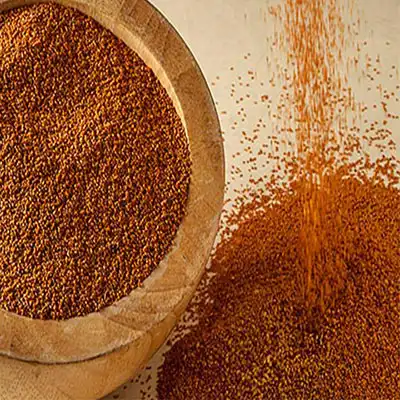
Flixweed
Discover Flixweed (Khakshir), a traditional medicinal plant. Learn about its health benefits, nutrition, traditional uses, preparation methods, and possible side effects.
Benefits & Properties
Common Name: Flixweed, Flixweed Seed
Scientific Name: Descurainia sophia (L.) Webb ex Prantl
History and Origin
Flixweed is an annual (rarely biennial) herbaceous plant. (1) This herb belongs to the Cruciferae (Brassicaceae) family. (2) Flixweed is native to South America, South Africa, southern Europe, Asia, and New Zealand. (3) This plant grows in a wide range of environments, including dry environments (1), and is widely distributed in different parts of the world. (4)
Its current distribution includes East Asia, southern Africa, South America, Australia, and New Zealand. It is also present in Northern Mexico and most of the USA and Canada. (1) Also, it grows wild in most regions of Iran, particularly in the northeast. (3)
Flixweed produces a lot of seeds that can remain viable in the soil for long periods of time. (1) It is known as a weed with high germination, especially in late autumn and early spring. (4) These seeds, commonly known as Flixweed Seeds or Khakshir, are widely used in traditional herbal beverages and natural wellness preparations...
Flixweed commonly grows in roadsides, pastures, cultivated areas, old fields (5), mountain slopes, canyon bottoms, and stream banks. (1)
The scientific name of this herb has undergone multiple revisions; it was first described by Linnaeus (a Swedish botanist) in 1753 under the binomial Sisymbrium sophia L. (1) Eventually, in 1892, Philip Barker Webb designated it as Descurainia sophia, and it was published by Karl Prantl. (6) The Greek epithet Sophia (wisdom) alludes to this species’ reputed medicinal properties. (1)
Flixweed Plant Structure
Flixweed grows up to 90 cm. (1) Star-shaped hairs on the leaves and stems give the plant a grayish-green color. (5) Stems are erect, unbranched or distally branched. (1) Stems are often branched above, and light yellow flowers are placed in terminal clusters. Leaves are alternate, stalked, 2.5 to 10 cm long, and divided into narrow segments; (5) the leaves are fern-like. (6)
Fruits are erect, narrow pods (1, 5) with 13-38 mm long and long pedicels. (5) Seeds are 10 to 20 in one row in each half of the silique. (6)
Flixweed seed is very tiny (3) (approximately 0.8 mm long (6)), dark yellow (3) or reddish brown (1), and has an uneven surface in a stretched oval form, one end of which is cut and maintains a transparent yellowish ring. (3)
The flixweed seed is very tiny (approximately 0.8 mm long), dark yellow or reddish brown, and stretched oval-shaped with an uneven surface. One end of the seed is cut and still has a translucent yellowish ring around it.
Flixweed Seed Health Benefits
What Are Flixweed Seed Side Effects?
- When taken by mouth: Excessive consumption of flixweed seeds can cause diarrhea in humans. (29)
* The most common undesirable effect traditionally reported from flixweed seeds was headache. Thus, it was recommended that tragacantha be accompanied by flixweed seed to prevent that effect. (4)
- Pregnancy and breast-feeding: Please discuss the benefits and risks with your healthcare provider before taking flixweed seeds. It is necessary to know that excessive consumption of flixweed seeds can cause bloating during breastfeeding for the mother and her baby. (29)
- Gastritis and stomach ulcers: People suffering from gastritis or stomach ulcers should limit the consumption of flixweed seeds.
- Generally, every person may be allergic to certain herbs and spices. This sensitivity must first be diagnosed by the person and secondarily by the physician. However, these allergic reactions do not cause chronic or acute side effects, and after identifying the allergenic plant and removing it from the diet, allergy-related complications will be eliminated. No company or product can be aware of the allergic reactions of different bodies in advance. The body's incompatibility with one or more specific herbs rarely occurs, but consumers may encounter it anyway.
Nutritional Information
Flixweed seeds contain protein, oil (69% PUFA, 22% monounsaturated fatty acids, 9% saturated fatty acids), various essential minerals (30) (including sulfur, phosphorus, iron, potassium, calcium, sodium, and magnesium) (31), and vitamins (C, E). (32)
Flixweed Seed Daily Dosage
According to Iranian herbal pharmacopoeia, 4 to 8 grams three times per day. (31)
* For some people, the dosage may need to be adjusted.
Bioactive Compounds
- Fatty acids: The oil made from flixweed seeds contains essential unsaturated fatty acids, including oleic and erucic acids (omega-9), linolenic acid (omega-3), and linoleic acid (omega-6), as well as saturated fatty acids, including palmitic acid and stearic acid. (4)
This oil contains unsaturated fatty acids (91.1%), with α-linolenic acid being predominant (48.5%), with a ω3/ω6 ratio of 2.7, and an erucic acid content of 6.2%. (33)
- Essential oil: The essential oils of flixweed seed contain benzyl, allyl, propenyl-isothiocyanate, and allyl disulfide constituents. (4)
- Amino acids: The amino acid profile of flixweed seed includes essential amino acids (threonine, phenylalanine, histidine, lysine, valine, isoleucine, and leucine) and nonessential amino acids (arginine, alanine, serine, glutamic acid, proline, glycine, tyrosine, and aspartic acid). (34)
* Essential amino acid: The body cannot produce essential amino acids. As a result, they must come from food.
- Also, some cardiac glycosides, lactones, flavonoids (4) (kaempferol, quercetin, and isorhamnetin derivatives (2)), and phenols (4) (mainly sinapic acid (33)) are also isolated from flixweed seeds.
Best Time to Consume
Generally, you can consume flixweed seeds (khakshir) at any time of the day. However, in many instructions, it is recommended to consume the seeds on an empty stomach.
- For relieving constipation: Before lunch and dinner. (8)
- For relieving irritable bowel syndrome (IBS) symptoms: Before lunch and dinner. (11)
Possible Drug Interactions
Medications changed by the liver: Flixweed seeds may interfere with the way the body processes many drugs using the liver's "cytochrome P450" enzyme system. Flixweed seeds might decrease how quickly the liver breaks down these medications. Taking it with some of these medications can increase their effects and side effects. So, if you are taking any medications that are changed by the liver, talk to your healthcare provider before taking flixweed seeds. Some medications changed by the liver include amitriptyline (Elavil), erlotinib, dasatinib, gefitinib, warfarin, tamoxifen, diazepam, mephenytoin, methadone, bortezomib, and nonsteroidal anti-inflammatory drugs (NSAID) like celecoxib, diclofenac, ibuprofen, or naproxen. (35)
Traditional Use
In traditional Persian manuscripts, this herb is cited as Khaksheer, Khakshee, Todri, Khobbah, and Bazr-al-khomkhom. (4) According to Persian Traditional Medicine (PTM), flixweed is of a warm and moist nature. (3)
- In PTM, the cold syrup of flixweed seeds with sugar and chicory is used for cooling, and the hot syrup of the seeds with sugar is administered as a laxative.
- Flixweed seed was traditionally considered an effective remedy for the evacuation of the morbid soada (black bile) from the body in PTM. Accordingly, it was used in diseases resulting from the abundance of black bile in the body. These disorders include varicocele, varicose veins, palpitation, hematologic diseases, dyspepsia, constipation, and hemorrhoids. (4) Also, it is believed that the secretion of soada (black bile) can cause a feeling of hunger. In the presence of an abundance of soada or a disturbance in the function of the pancreas, the secretion of soada increases abnormally, and the patient feels heartburn and likes to eat more frequently to relieve the pain. For these patients, a maceration of flixweed seed in water was highly recommended for the relief of heartburn as it can evacuate the soada out of the body. (17)
- In PTM, the seed is also prescribed for skin darkness, urticaria, eruptions of measles, hoarseness, and impotence. (4)
- In traditional Chinese medicine, flixweed seed is used as an herbal remedy to prevent asthma and manage coughs. It's also been used for centuries as a cardiotonic plant. It is considered as an expectorant, febrifuge, antihelmintic, astringent, antipruritic, and litholytic agent. (4)
- Also, flixweed seeds have been traditionally prescribed as a treatment for chest congestion, inflammation, relieving diarrhea, treating vitamin C deficiency, detoxifying the liver and spleen, and having disinfectant properties. (36)
Some Questions about Flixweed Seed
References
1. https://www.researchgate.net/publication/323258117
2. https://www.acgpubs.org/doc/201808051347577-RNP-0811-54.pdf
3. https://www.ncbi.nlm.nih.gov/pmc/articles/PMC4486533/
4. https://www.ncbi.nlm.nih.gov/pmc/articles/PMC4930533/
5. https://accs.uaa.alaska.edu/wp-content/uploads/Descurainia_sophia_BIO_DESO2.pdf
6. https://ucanr.edu/repository/fileaccess.cfm?article=167426&p=ZUVDUW
7. http://journal.rums.ac.ir/files/site1/user_files_e1c3fe/at-A-10-1321-1-f89b8cd.pdf
8. http://research.shahed.ac.ir/WSR/SiteData/PaperFiles/10002_1111282212.pdf
9. https://www.ncbi.nlm.nih.gov/pmc/articles/PMC4506010/
10. https://www.medsci.org/v17p2163.htm
11. https://www.sciencedirect.com/science/article/abs/pii/S1550830718301873
12. https://www.ncbi.nlm.nih.gov/pmc/articles/PMC6278437/
13. https://downloads.hindawi.com/journals/ecam/2022/2477510.pdf
14. https://www.ncbi.nlm.nih.gov/pmc/articles/PMC6332279/
15. https://www.hindawi.com/journals/ecam/2018/1904081/
16. https://www.researchgate.net/publication/350560063
17. https://www.hindawi.com/journals/ecam/2022/2001441/
18. https://www.researchgate.net/publication/328573941
19. http://herbmedpharmacol.com/Article/jhp-1304
20. https://brieflands.com/articles/jhrt-115280.pdf
21. https://pesquisa.bvsalud.org/portal/resource/pt/emr-160329
22. https://www.sciencedirect.com/science/article/abs/pii/S0378874122006778
23. https://www.mdpi.com/2076-3921/11/6/1128
24. https://www.sciencedirect.com/science/article/abs/pii/S2352554120300085
25. https://www.ncbi.nlm.nih.gov/pmc/articles/PMC4584456/
26. https://link.springer.com/article/10.1186/s12906-016-1094-0
27. https://link.springer.com/article/10.1007/s12272-013-0066-x
28. https://mjiri.iums.ac.ir/article-1-1584-en.pdf
29. https://www.naturalremediest.com/flixweed-seeds-benefits/
30. https://www.researchgate.net/publication/327040459
31. Ghasemi Dehkordi N, Sajadi S, Ghanadi A, Amanzadeh Y, Azadbakht M, Asghari GR, Amin G, Hajakhondi A, Tale AM. Iranian herbal pharmacopoeia. Ministry of Health Pub Tehran. 2002;1:105. [Persian].
32. https://link.springer.com/referenceworkentry/10.1007/978-3-030-28940-9_52
33. https://link.springer.com/article/10.1007/s11746-015-2693-5
34. https://fppn.biomedcentral.com/articles/10.1186/s43014-021-00076-8
35. https://www.ncbi.nlm.nih.gov/pmc/articles/PMC4683934/
36. https://www.sciencedirect.com/science/article/abs/pii/S221242921730072X