Peach
Discover the natural plants and herbs used in our products
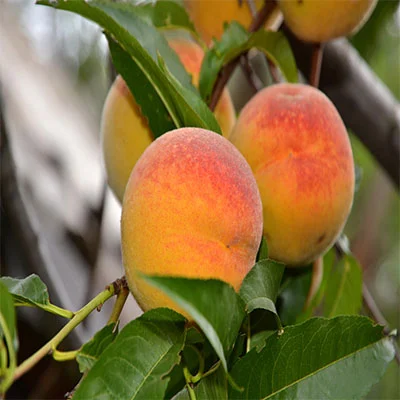
Peach
Peaches are an evergreen or deciduous fruit trees from the Rosaceae family. Peach tea contains antioxidant compounds and can eliminate toxins from the body.
Benefits & Properties
Common Name: Peach, Aaru
Scientific Name: Prunus persica [L.] Batsch
History and Origin
According to Chinese literature, the origin and cultivation of peaches date back to 1000 B.C. in China. (1) About 3000 years ago, peaches were transferred from China to all regions with temperate and subtropical climates on the Asian continent; they were spread to Persia (the ancient name of Iran) through the Silk Road and from there throughout Europe; and from Europe, they were taken to the Americas by Spanish and Portuguese explorers. (2)
The species name (persica) of this fruit tree is derived from the word "Persia", which also indicates its path of trade in ancient times. About 1400 BC, the Egyptians used peaches in offerings to the "God of Tranquillity". The plant was cultivated in Greece by 332 B.C., according to Plinius, and Virgil (70–19 B.C.) mentioned it in Roman literature. (3)
Although peaches originate from China, in the past, the Romans called them Persian apples. That name translates as "pêche" in French, which eventually resulted in the current English name for the peach. (4)
Peaches, as an important fruit crop, are now cultivated more widely in temperate regions worldwide (5), with the Asia continent accounting for about half of that production. (6) As the largest producer of peach fruits in the world, China currently has approximately more than 1000 peach cultivars (1), followed by Italy, Spain, and the United States of America (USA). (7)
Peaches are crucial in terms of nutrition and economy, and they are an essential part of the human diet. They are among the most consumed fruits in the world due to their amazing flavor and taste. (2)
They have a comparatively short storage life, and peaches can be used as fresh, dry, or frozen fruit. (8) Also, they are processed to produce canned fruit, jellies, jams, juice, pulp for yogurts, and liquors. (2)
Peach Plant Structure
Prunus has nearly 200 species cultivated for their edible fruits and seeds. (1) Five species are considered peaches:
− P. davidiana (Carr.) Franch., which is native to North China
− P. ferganensis (Kost. et Rjyb.) Kov. et Kost., which grows in Western China
− P. kansuensis Rehd., which is native in north-western China
− P. mira Koehne, which grows along the Yellow and Yangtze Rivers as well as in the Himalayan Mountains
− P. persica (L.) Batsch., which includes the majority of peach commercial cultivars. (3)
Therefore, it is one of the most variable species of fruit, with the largest number of commercial cultivars assuming different shapes, sizes, flesh (red, white, or yellow flesh), types of skin, the seed (7), and stone adhesion to flesh (free stone, semi-cling stone, and cling stone), (1) among other variable aspects regarding this popular fruit. (7)
Peach is a deciduous or evergreen tree from the Rosaceae family that grows up to 10 meters in height. (1) At the beginning of spring, the peach blooms appear much earlier than the leaves.
They are either single or combined, pink (8) or pinkish-white. (1) The leaves of the peach are flat, alternating, long-lanceolate, serrulate, 8–15 cm long, 15–35 mm wide, and have 1-1.5 cm petioles. (8) The fruit of the peaches is a stone-fruit crop (drupe) (1) that has a velvety (fuzzy) surface and a pleasant smell. (8)
It has yellow, whitish flesh, (8) or blood. (5) In peach peels, color is a key determinant for fruit quality because the color is regulated by flavonoids, including anthocyanin compounds (9) that promote human health. (5) The seed is single, broad, reddish-brown, approximately 1.3–2 cm long, oval-shaped, and enclosed by a wood-like husk. (8)
Peach Health Benefits
What Are Peach Side Effects?
When taken by mouth: There is not enough documented data to indicate the side effects of peaches. (17) While most people can safely eat peaches in moderation as part of a healthy diet. (18) Excessive consumption of peaches can cause bloating. (19)
Pregnancy and breast-feeding: If you are pregnant or breastfeeding, it is recommended that you consult your doctor about the safety of peaches during this time. (17)
Diabetes: Peaches are higher in carbohydrates, so if you are diabetic, just be aware of how much you are eating during the day. (18)
Digestive problems such as irritable bowel syndrome or Crohn's disease: Peaches are a high-FODMAP fruit due to their fructose content. Peaches should be avoided if you are on a low-FODMAP diet to relieve digestive discomfort caused by irritable bowel syndrome (IBS) or Crohn's disease. (20)
FODMAP stands for fermentable monosaccharides, disaccharides, oligosaccharides, and polyols, which are short-chain carbohydrates (sugars) that are poorly absorbed by the small intestine. Some people have digestive problems after consuming them. (21)
Allergy to the Rosaceae family: If you’re allergic to fruits such as apples, apricots, plums, and cherries, you may also be allergic to peaches. Peach is among the more common fruit allergies and typically causes itching and swelling of the mouth or throat. So, talk with your healthcare provider if you suspect a fruit allergy. (22)
Allergy to birch tree pollen: People with birch pollen allergies have a greater risk of being allergic to peaches. This is due to the presence of a protein similar to one found in birch pollen. If you have a known allergy, you should avoid it. (18)
Generally, every person may be allergic to certain herbs and spices. This sensitivity must first be diagnosed by the person and secondarily by the physician. However, these allergic reactions do not cause chronic or acute side effects, and after identifying the allergenic plant and removing it from the diet, allergy-related complications will be eliminated. No company or product can be aware of the allergic reactions of different bodies in advance. The body's incompatibility with one or more specific herbs rarely occurs, but consumers may encounter it anyway.
Nutritional Information
Nutritional value of fresh peaches per 100 g:
Energy (163 kJ), water (89 g), protein (0.9 g), total lipid (0.3 g), fiber (1.5 g), carbohydrate (9.9 g), ash (0.8 g), total sugars (8.4 g), calcium (1%), iron (2%), magnesium (9 mg), phosphorus (20 mg), potassium (190 mg), copper (0.1 mg), zinc (0.2 mg), vitamin C (6.6 mg), vitamin E (0.7 mg), vitamin A (362 IU), and choline (6.2 mg). (23)
Peach Daily Dosage
Researchers report that in order to benefit from the health properties of peaches, a person would need to eat two to three peaches daily. (24)
Bioactive Compounds
The fruit is a relatively low source of calories (23) as it is low in fat and contains a lot of water (approximately 89 g per 100 g of fruit). This fruit is very nutritious; it is rich in both macro- and micronutrients. (7)
- Carbohydrate: Peaches are a somewhat good source of carbohydrate. These carbohydrates are present mostly as sugars in the fruit.
- Lipids: Peach is low in triglycerides and practically free of cholesterol. The fat content of peaches is mostly monounsaturated and polyunsaturated fatty acids. The major fatty acids in peaches are oleic acid (omega-9) and linoleic acid (omega-6).
- Dietary Fiber: Peaches are considered a good source of fiber. Peaches are known for their high pectin content. Other than pectin, hemicellulose, cellulose, xylose, and lignan constitute the fiber content.
- Organic acid: Organic acid imparts a characteristic flavor to peaches. Malic, citric, fumaric, and tartaric acids are the several organic acids responsible for its flavor. Moreover, phenolic acids such as chlorogenic, mucic, and skimmic acids are also present in abundance. However, the major organic acids in peaches that are present in the same quantities are malic and citric acids.
- Protein: Peaches provide a meager amount of protein. The prominent amino acid in peaches is alanine, which is responsible for the characteristic taste of peaches. In addition, the fruit contains lysine, serine, arginine, phenylalanine, tyrosine, and glycine.
- Polyphenolics: They are widely distributed in plant tissue and play a role in fruit color and taste. Peaches are a concentrated source of polyphenols, with chlorogenic acid, epicatechin, and catechin being the predominant. Besides these, protocatechuic acid, neochlorogenic acid, quercetin-3-glucoside, gallic acid, ellagic acid, anthocyanins, rutin, and flavonols are present too. (23)
Anthocyanidins can be divided into cyanidin, delphinidin, and pelargonidin. In peach fruits, the predominant component of anthocyanin is cyanidin-3-glucoside, with a trace amount of cyanidin-3-rutinoside. (5)
- Carotenoids: They are regarded as the most widespread pigments in nature and are responsible for colors ranging from yellow to red. Carotenoids, vitamin A precursors, are a class of antioxidants. The predominant carotenoids in these fruits are β-carotene, α-carotene, zeaxanthin, and lutein.
- Vitamins and minerals: Peaches are excellent sources of vitamin A, C, and E and also provide B-complex vitamins.
Peaches, like other fruits, have a high potassium content. Peaches are low in sodium but contain magnesium, phosphorous, zinc, copper, manganese, iron, and calcium in good amounts. (23)
Best Time to Consume
1-2 hours before or after meals.
Possible Drug Interactions
There is insufficient documented data to show the interactions of peaches with other drugs. However, there is a chance that they may react to a few drugs. So, if you're on medication, talk to your doctor about whether eating peaches would interfere with your medication. (17)
Traditional Use
Peach has been used for the treatment of hypermenorrhea, dysmenorrhea, and infertility in Asian countries. (16) In traditional Chinese medicine (TCM), peaches have been used to treat various chronic diseases like diabetes, heart disease, and nervous system disorders.
Peaches have also played an extremely important role in Indian Ayurveda due to their medicinal benefits, like protection against and prevention of heart failure and all types of gastrointestinal disorders such as ulcers. (25)
Some Questions about Peach
References
1. https://www.researchgate.net/publication/323258290
2. https://air.unimi.it/bitstream/2434/164343/2/Chapter%2014.pdf
3. https://www.oecd-ilibrary.org/docserver/9789264095403-7-en.pdf
4. https://www.funfactsabout.com/facts-about-peaches/
5. https://onlinelibrary.wiley.com/doi/full/10.1111/tpj.12792
6. https://justagriculture.in/files/magazine/2022/
7. https://www.tandfonline.com/doi/pdf/10.1080/87559129.2020.1837861
8. https://globalresearchonline.net/journalcontents/v60-2/07.pdf
9. https://link.springer.com/article/10.1007/s00425-014-2078-2
10. https://www.webmd.com/a-to-z-guides/what-is-oxidative-stress
11. https://www.sciencedirect.com/science/article/abs/pii/S1386142514007641
12. https://www.ncbi.nlm.nih.gov/pmc/articles/PMC9702882/
13. https://www.jkom.org/upload/01-Effect%20of%20Do-In(105245).PDF
14. https://www.pnas.org/doi/10.1073/pnas.1703601115
15. https://www.ncbi.nlm.nih.gov/pmc/articles/PMC4027320/
16. https://www.ncbi.nlm.nih.gov/pmc/articles/PMC5380186/
17. https://pharmeasy.in/blog/ayurveda-uses-benefits-side-effects-of-peaches/
18. https://www.everydayhealth.com/diet-nutrition/peaches/guide/
20. https://www.verywellfit.com/peaches-carb-counts-and-benefits-1087566
21. https://www.hopkinsmedicine.org/health/wellness-and-prevention/fodmap-diet-what-you-need-to-know
22. https://www.webmd.com/diet/peach-tea-health-benefits
23. https://www.researchgate.net/publication/352417774
24. https://www.healthline.com/nutrition/peach-fruit-benefits#TOC_TITLE_HDR_6
25. https://avtbeverages.com/blog/what-are-the-health-benefits-of-peach-tea/