Pumpkin
Discover the natural plants and herbs used in our products
Pumpkin
Pumpkin seed oil (C. pepo variety styriaca) is useful for benign prostatic hyperplasia, overactive bladder, menopause symptoms, hair growth, and skin aging.
Benefits & Properties
Common Name: Hulless Seed Pumpkin, Pumpkin Oil
Scientific Name: Cucurbita pepo var. Styriaca cv. Pepo
History and Origin
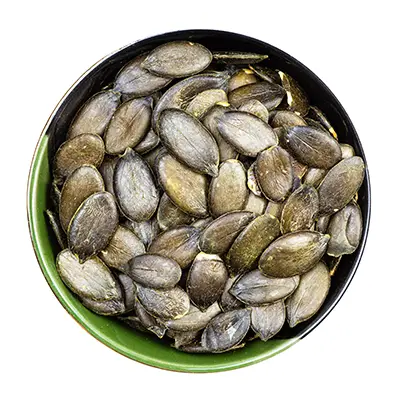
The genus Cucurbita is composed of the following five species: C. pepo, C. moschata, C. maxima, C. turbaniformis, and C. ficifolia. (1) Different species of pumpkin plant (Cucurbita sp.) are now grown extensively in many of the temperate and warmer climates of the world. (2) North America is the natural habitat of C. pepo, which has been grown there for many millennia. When it comes to fruit qualities in particular, this species varies the most. (1) C. pepo variety styriaca, known as medicinal pumpkin, is an annual plant from the Cucurbitaceae family. (3) This variation resulted from an accidental spontaneous mutation and led to a very thin outer hull (naked or hull-less seeds) that significantly speeds up the extraction of pumpkin seed oil. Also, this mutation causes the dark green color of pumpkin seeds. (4) The southern parts of Austria (the province of Styria) and the neighboring countries of Slovenia and Hungary are major producers of hull-less or naked pumpkin seed. (1) It has been used as a vegetable and medicine since ancient times but has been cultivated as a valuable medicinal plant and for therapeutic purposes only in recent decades. (3) The fresh and dried seeds are its medicinal parts. (5)
Pumpkin Plant Structure
C. pepo is a plant 3 to 8 m long. The stem has longitudinal grooves and hairy spines. The leaves are alternate, very large and bristly, petiolate, with 5 to 7 lobes. The flower is yellow and very large. The male flower has a longer pedicle. The fruit is very large and has many seeds. The flesh is fibrous, yellow-orange to white. The seeds are 7 to 15 mm long, narrow, broad, or narrow-ovate. The seeds taste somewhat like almonds. (5) The fruits, flowers, and seeds of the pumpkin are edible portions. Also, this plant is planted for ornamental reasons. (6)
Pumpkin Oil Health Benefits
What Are Pumpkin Oil Side Effects?
- When taken by mouth, pumpkin oil is likely safe for most people when eaten in amounts commonly found in food. In medical doses, pumpkin oil may be safe to consume. Pumpkin oil side effects are uncommon; however, they might include nausea, diarrhea, and an upset stomach.
- Topical use: There isn't enough trustworthy data available to determine if pumpkin oil is safe to apply to the skin or what potential negative effects there could be. (14)
Therefore, it’s a good idea to check for an allergic reaction before using pumpkin oil. An easy way to do this is to do a patch test on your skin. Apply some of this natural oil to your forearm and wait for a few hours. Avoid use if you notice any adverse effects like redness, swelling, itching, rashes, inflammation, or burning sensations.
- Pregnancy and breast-feeding: Pumpkin oil safety during pregnancy and breastfeeding is unknown due to a lack of trustworthy information. Please discuss the benefits and risks with your healthcare provider before taking pumpkin oil. Before consumption, consult with your doctor about the benefits or risks of using pumpkin oil during these periods.
- Children: When considering the oral or topical use of pumpkin oil in children, it's crucial to consult with a pediatrician.
- Allergies: In some individuals, pumpkin oil may also result in rashes, itching, and allergic responses. If you experience allergic reactions following the consumption of this oil, discontinue use immediately and seek the advice of a medical professional. (14)
Generally, every person may be allergic to certain herbs and spices. This sensitivity must first be diagnosed by the person and, secondarily, by the physician. However, these allergic reactions do not cause chronic or acute side effects, and after identifying the allergenic plant and removing it from the diet, allergy-related complications will be eliminated. No company or product can be aware of the allergic reactions of different bodies in advance. The body's incompatibility with one or more specific herbs rarely occurs, but consumers may encounter it anyway.
Nutritional Information
The pumpkin seeds yield approximately 50% fatty oil. (15) The oil is rich in phytosterols, fatty acids, squalene, and tocopherols. (7)
Pumpkin Oil Daily Dosage
One teaspoon, which is equivalent to 3 to 5 milliliters.
Bioactive Compounds
It mostly contains linoleic and oleic acids and tocopherol, but the putative active constituents are delta-7-sterols (avenasterol, spinasterol) and delta-5-sterols (sitosterol, stigmasterol). About 98% of the total fatty acids in pumpkin oil consist of four fatty acids: linoleic (a polyunsaturated omega-6 fatty acid), oleic (a mono-unsaturated omega-9 fatty acid), palmitic, and stearic acids. (15)
Best Time to Consume
The best time to use pumpkin oil depends on your specific needs and preferences. For example, use it for cooking, skincare, haircare, aromatherapy, massage, or dietary purposes.
Possible Drug Interactions
Lithium: Consuming pumpkin oil may slow down the body's metabolism of lithium. Serious negative effects might arise from this and raise the body's lithium levels. If you use lithium, see your doctor before using this oil. Maybe you should adjust your dosage of lithium. (14)
Traditional Use
In folk medicine, the fresh and dried seeds are used for kidney inflammation, intestinal parasites, particularly tapeworm, and wounds. (5)
Some Questions about Pumpkin Oil
References
1. https://jast.modares.ac.ir/article-23-9897-en.pdf
2. https://grasasyaceites.revistas.csic.es/index.php/grasasyaceites/article/view/1472/1500
3. https://www.mdpi.com/2311-7524/7/12/588
4. https://www.sciencedirect.com/science/article/abs/pii/S2214786117302437
5. PDR for herbal medicines. (2000). 2nd ed. Montvale, NJ: Medical Economics Company
6. https://www.sciencedirect.com/topics/agricultural-and-biological-sciences/cucurbita-pepo
7. https://www.tandfonline.com
8. https://pubmed.ncbi.nlm.nih.gov/10753555
9. https://styriangold.ca/wp-content/uploads/2018/07/Pilot-study-on-PSO-suplement-2011.pdf
10. https://journals.sagepub.com/doi/pdf/10.1177/1934578X0700200409
11. https://pubmed.ncbi.nlm.nih.gov/26186459/
12. https://www.redalyc.org/pdf/2890/289031817074.pdf
13. https://link.springer.com/article/10.1186/s12944-016-0237-0